










A Seat by Permission: The Kursi Nashin Certificate.
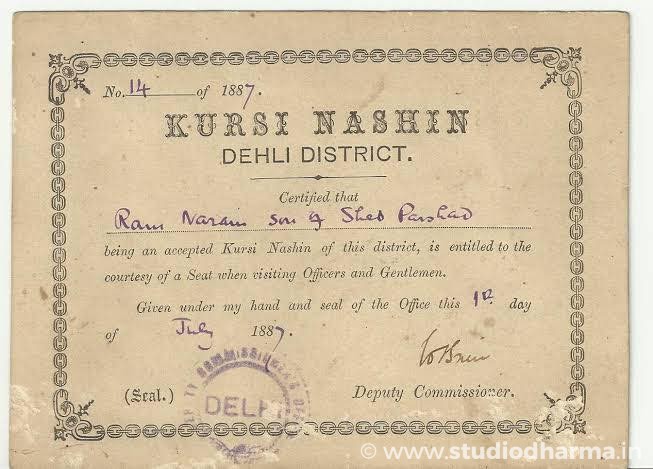
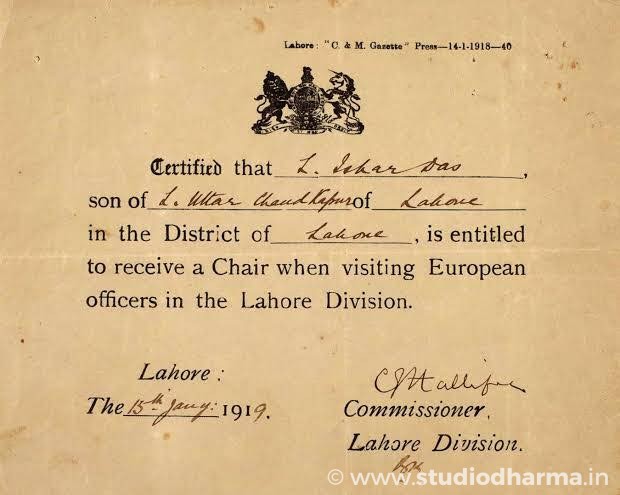
A Seat by Permission: The Kursi Nashin Certificate.
During British rule in India, not all Indians were allowed to sit in the presence of colonial officials. A special document called the Kursi Nashin Certificate granted that rare privilege.
???? “Kursi Nashin” literally means “chair sitter.” It was more than just a phrase — it symbolized approval, status, and access.
???? These certificates, stamped and signed by British officers, allowed selected individuals to sit while others were expected to stand, serve, or wait — reinforcing the deep social divide of colonial India.
???? Interestingly, this discriminatory custom wasn’t entirely new. The practice of not sitting in the presence of rulers was also perpetuated during the Mughal era — used as a tool of power and social control. But under the British, it became racialized and institutionalized through official documents.
???? Though not issued in all parts of the country, where they did exist, they became a symbol of status and submission.
➡️ Introduced and common throughout the 19th century, especially from the early 1800s to late 1800s.
➡️ Peaked between 1858 (after the 1857 revolt) and the early 1900s, when the British Crown took over from the East India Company.
➡️ The practice declined by the 1930s and ended completely after India’s independence in 1947.
Today, the Kursi Nashin Certificate survives only as a relic — a reminder of a time when even the right to sit was controlled by empire.
बैठने की इजाज़त: कुर्सी नशीन सर्टिफिकेट
ब्रिटिश राज में हर भारतीय को अंग्रेज अधिकारियों के सामने बैठने की अनुमति नहीं थी। केवल कुछ विशिष्ट व्यक्तियों को ही मिलता था एक दस्तावेज — ‘कुर्सी नशीन सर्टिफिकेट’, जो उन्हें यह विशेषाधिकार देता था।
???? ‘कुर्सी नशीन’ का अर्थ है “कुर्सी पर बैठने वाला” — लेकिन उस दौर में यह सामाजिक दर्जे और मान्यता का प्रतीक बन चुका था।
???? अंग्रेज अफसरों द्वारा हस्ताक्षरित और मुहरबंद ये प्रमाणपत्र सिर्फ उन्हें मिलते थे जिन्हें वे “योग्य” समझते थे। अन्य लोगों को खड़ा रहना, सेवा करना या प्रतीक्षा करना पड़ता था।
???? यह परंपरा पूरी तरह से नई नहीं थी। मुगल दरबारों में भी शासकों के सामने न बैठने की परंपरा थी, जो शक्ति और अनुशासन का प्रतीक मानी जाती थी। लेकिन ब्रिटिश राज में इसे नस्लीय भेदभाव के साथ औपचारिक दस्तावेज़ के रूप में लागू किया गया।
???? हालांकि यह प्रमाणपत्र पूरे भारत में नहीं जारी होते थे, लेकिन जहाँ भी इनका चलन था, वहाँ यह रुतबे और अधीनता का प्रतीक बन गए थे।
➡️ इनका चलन 19वीं शताब्दी की शुरुआत से ही था, खासकर ब्रिटिश शासन के विस्तार के समय।
➡️ यह प्रथा 1858 के बाद (1857 के विद्रोह के बाद) और 1900 की शुरुआत तक सबसे अधिक प्रचलित रही, जब ब्रिटिश राज ने ईस्ट इंडिया कंपनी से सत्ता अपने हाथ में ले ली थी।
➡️ 1930 के दशक तक यह परंपरा कमज़ोर पड़ गई और 1947 में आज़ादी के साथ पूरी तरह समाप्त हो गई।
आज ये केवल इतिहास की वस्तुएँ हैं — एक समय की याद दिलाती हैं जब बैठना भी अनुमति पर निर्भर था।
.1