








𝓣𝓱𝓮 𝓘𝓻𝓸𝓷 𝓟𝓲𝓵𝓵𝓪𝓻, 𝓠𝓾𝓽𝓾𝓫 𝓒𝓸𝓶𝓹𝓵𝓮𝔁, 𝓜𝓮𝓱𝓻𝓪𝓾𝓵𝓲.
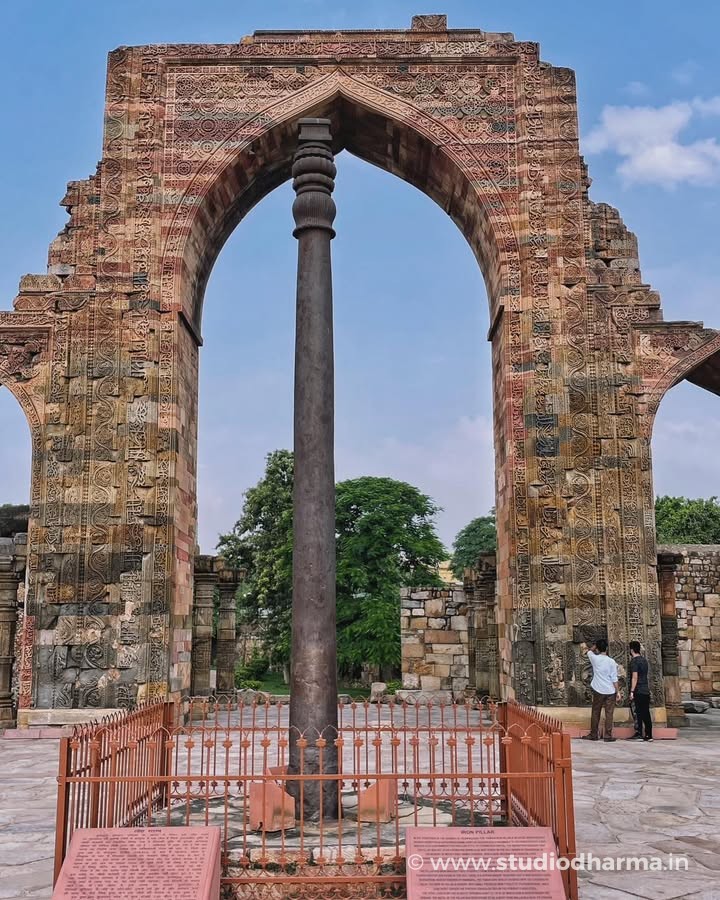
𝓣𝓱𝓮 𝓘𝓻𝓸𝓷 𝓟𝓲𝓵𝓵𝓪𝓻, 𝓠𝓾𝓽𝓾𝓫 𝓒𝓸𝓶𝓹𝓵𝓮𝔁, 𝓜𝓮𝓱𝓻𝓪𝓾𝓵𝓲.
A 1,600-Year-Old Mystery That Refuses to Rust
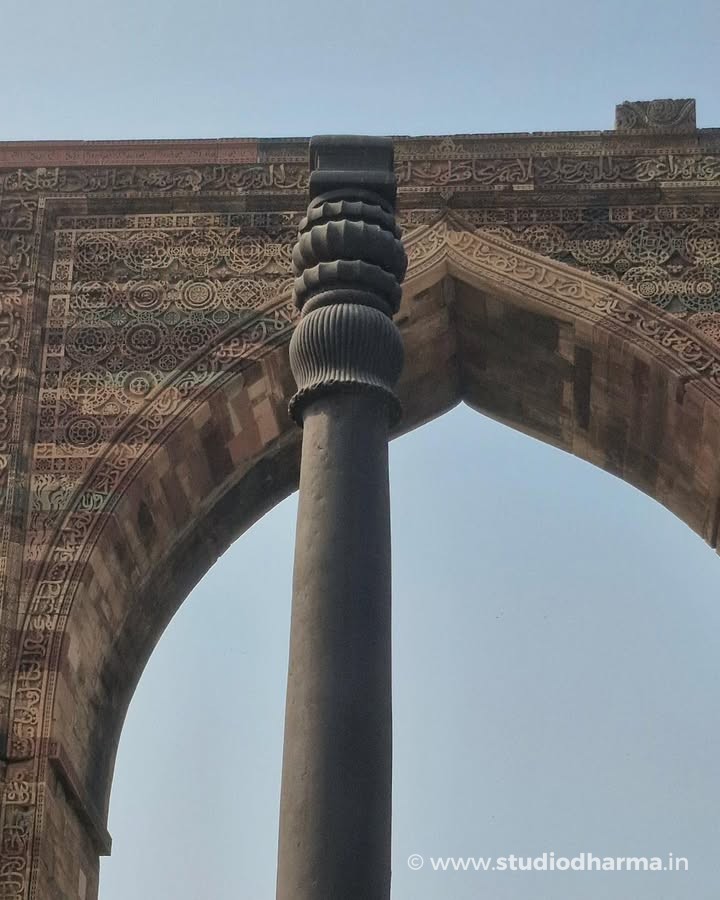
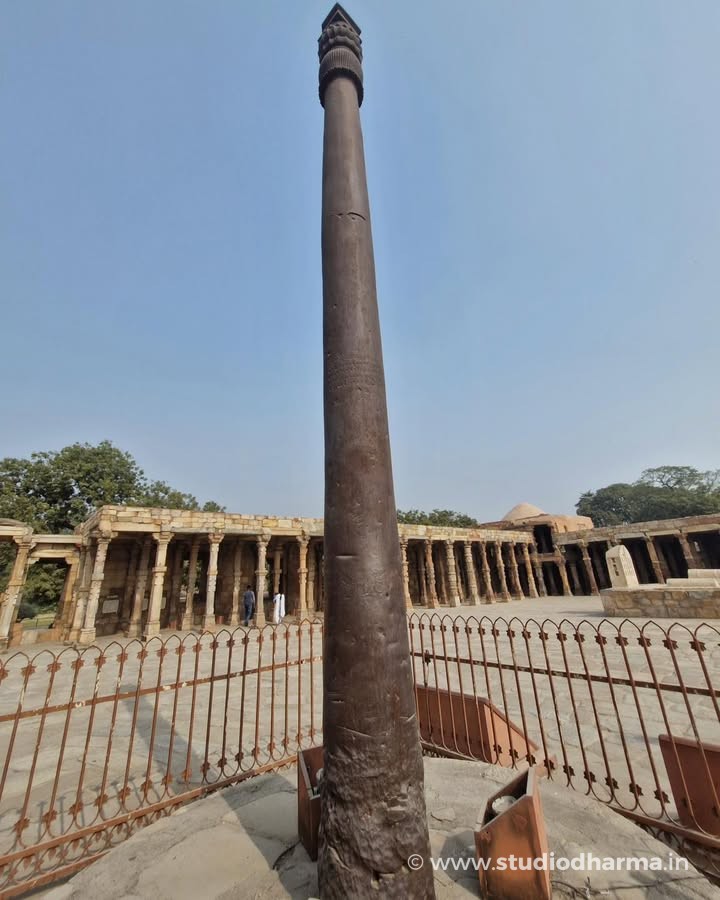
Standing quietly within the Qutub Minar complex at Mehrauli, Delhi, the Iron Pillar is one of India’s most extraordinary scientific and historical marvels. Rising to a height of over 7 meters and weighing more than 6 tons, this massive column of iron has stood almost unaffected by corrosion for nearly sixteen centuries.
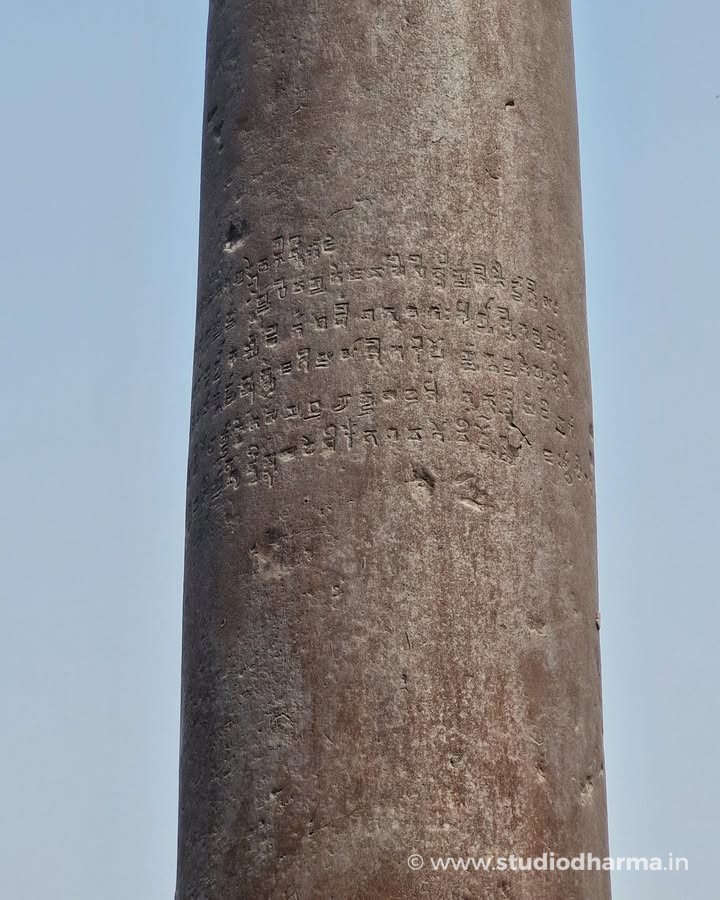
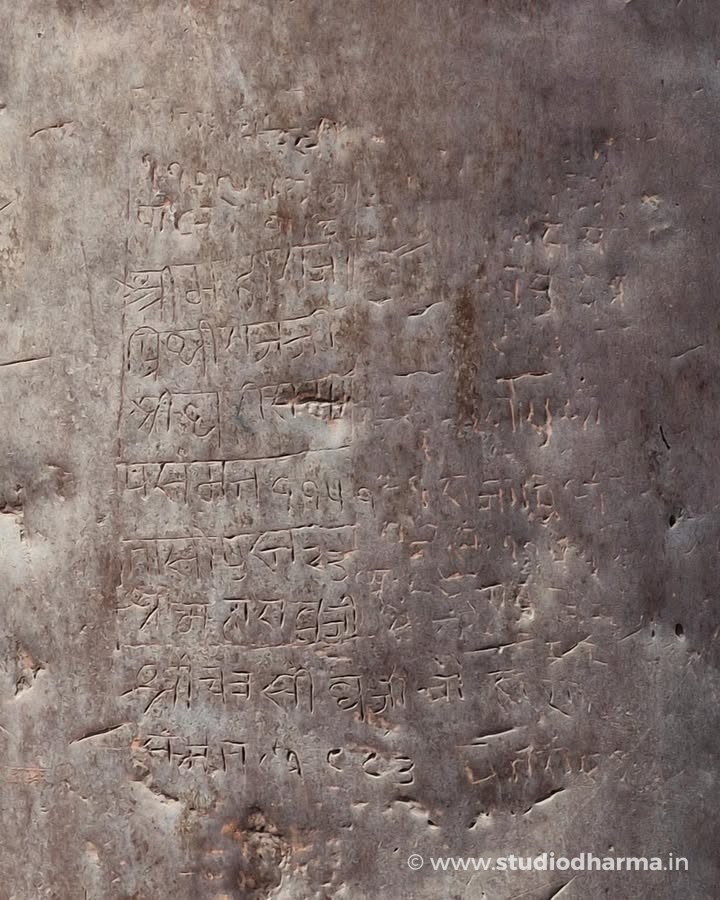
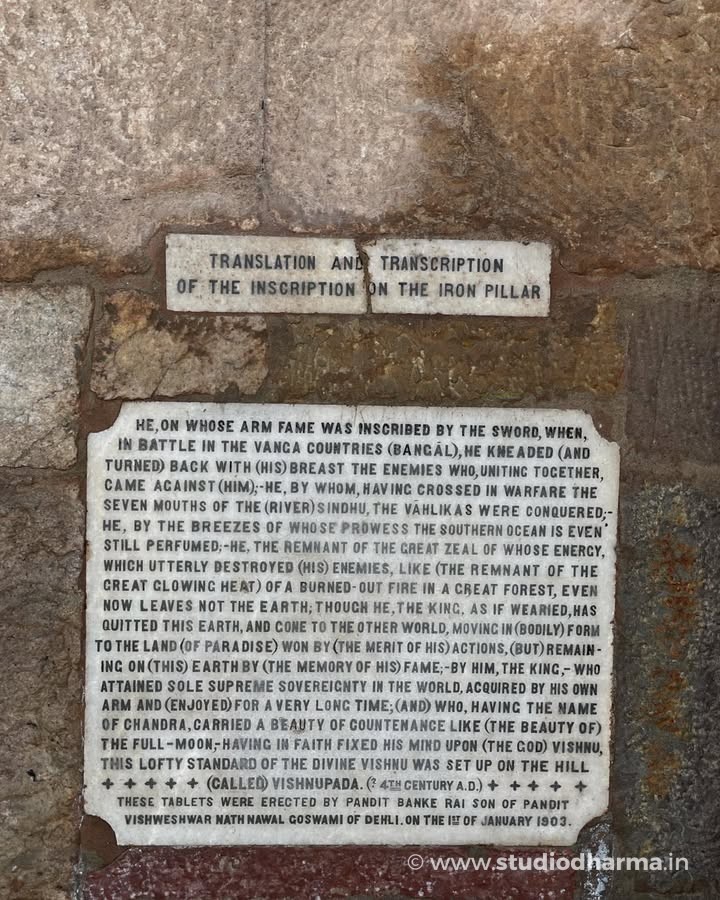
Scholars identify the pillar’s creator as “King Chandra,” widely accepted as the Gupta emperor Chandragupta II (c. 375–415 CE). The Sanskrit inscription engraved on the pillar praises his military victories and devotion to Vishnu, confirming that it was originally erected as a dhwaj (sacred standard) dedicated to Lord Vishnu during the Gupta period. Many historians believe it once stood near the Udayagiri region of central India before being relocated to Delhi.
The mystery deepens with its relocation. While one tradition credits the Tomara ruler Anangapala in the 11th century, most historians associate its movement to Mehrauli with the Delhi Sultanate, likely during the reign of Sultan Iltutmish in the 13th century, when it was installed near the Quwwat-ul-Islam mosque. Despite political upheavals and environmental exposure, the pillar remained intact.
What truly astonishes scientists is its metallurgy. The Iron Pillar is made of high-purity wrought iron rich in phosphorus and nearly free of sulfur and manganese. Ancient forge-welding techniques allowed its makers to create a massive structure that, over time, developed a thin protective layer of iron hydrogen phosphate hydrate (often called misawite). This passive film prevents rusting, making the pillar a global benchmark for ancient metallurgical excellence.
Legends also surround it. A popular tale recorded in later traditions claims that a Tomara king attempted to uproot the pillar, believing it was a nail holding the earth in place. When blood appeared at its base, the act was abandoned, and Delhi came to be known as “Dhilli,” or loose. While folklore adds romance, the verified history of the pillar is no less remarkable.
The Iron Pillar is not merely a relic of the past; it is enduring proof that ancient India possessed scientific knowledge and engineering skill far ahead of its time—knowledge that modern metallurgy continues to study with admiration.
Discover more such verified and forgotten stories of India’s layered past in ITIHASNAMA by StudioDharma.
Purchase link:
लौह स्तंभ, क़ुतुब संकुल, महरौली
सोलह सौ वर्षों से जंग को चुनौती देता एक स्तंभ
दिल्ली के महरौली स्थित क़ुतुब परिसर में खड़ा लौह स्तंभ भारत की प्राचीन वैज्ञानिक और धातुकर्म परंपरा का अद्वितीय प्रमाण है। लगभग 7.2 मीटर ऊँचा और 6 टन से अधिक वज़न वाला यह स्तंभ पिछले लगभग 1600 वर्षों से बिना जंग लगे आज भी सुरक्षित खड़ा है।
इसके शिलालेख में उल्लिखित “राजा चन्द्र” को इतिहासकार गुप्त सम्राट चन्द्रगुप्त द्वितीय (375–415 ई.) से जोड़ते हैं। संस्कृत में उत्कीर्ण यह लेख उनकी विजयों और भगवान विष्णु के प्रति भक्ति का वर्णन करता है, जिससे यह स्पष्ट होता है कि यह स्तंभ मूलतः विष्णु ध्वज के रूप में स्थापित किया गया था। माना जाता है कि यह पहले मध्य भारत के उदयगिरि क्षेत्र में स्थित था।
बाद में इसे दिल्ली लाया गया। कुछ परंपराएँ इसे तोमर राजा अनंगपाल से जोड़ती हैं, जबकि अधिकांश इतिहासकार इसका स्थानांतरण 13वीं शताब्दी में दिल्ली सल्तनत, विशेषकर सुल्तान इल्तुतमिश के काल में मानते हैं। राजनीतिक बदलावों और मौसम की मार के बावजूद स्तंभ अडिग रहा।
वैज्ञानिक दृष्टि से यह स्तंभ और भी आश्चर्यजनक है। उच्च फॉस्फोरस युक्त शुद्ध लोहे से बने इस स्तंभ की सतह पर समय के साथ एक सुरक्षात्मक परत बन गई, जिसे आयरन हाइड्रोजन फॉस्फेट हाइड्रेट कहा जाता है। यही परत इसे जंग से बचाती है और इसे प्राचीन भारतीय धातुकर्म की महान उपलब्धि बनाती है।
लोककथाओं में इसे धरती को थामे रखने वाली कील बताया गया है, किंतु प्रमाणित इतिहास स्वयं इतना समृद्ध है कि किसी कल्पना की आवश्यकता नहीं पड़ती। लौह स्तंभ आज भी यह सिद्ध करता है कि प्राचीन भारत विज्ञान और तकनीक में अपने समय से बहुत आगे था।
भारत की विरासत की ऐसी ही प्रमाणिक कहानियाँ पढ़ें ITIHASNAMA by StudioDharma में।
खरीदने का लिंक: