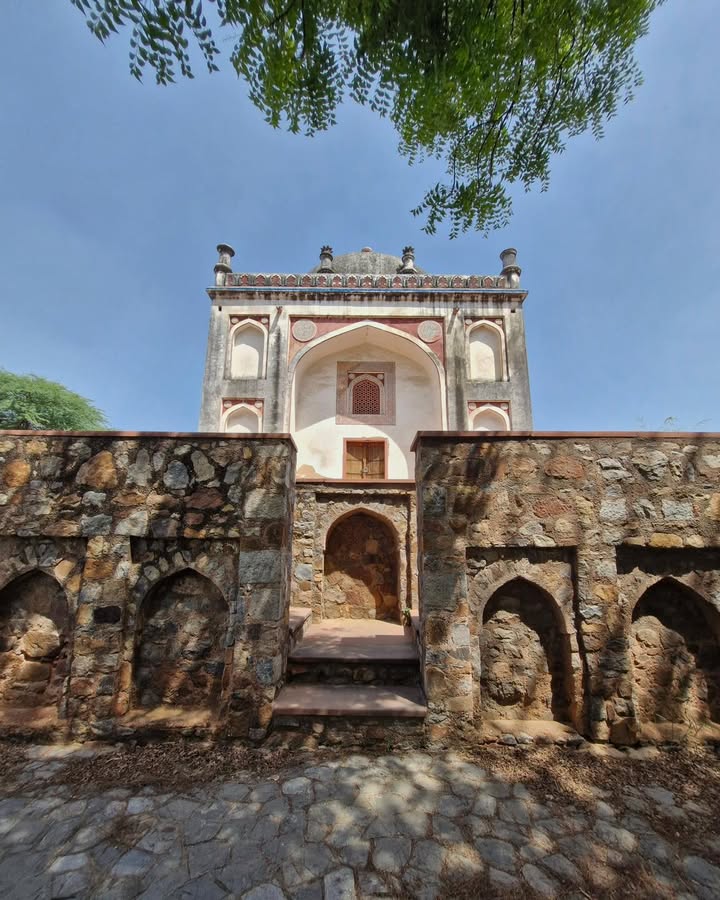
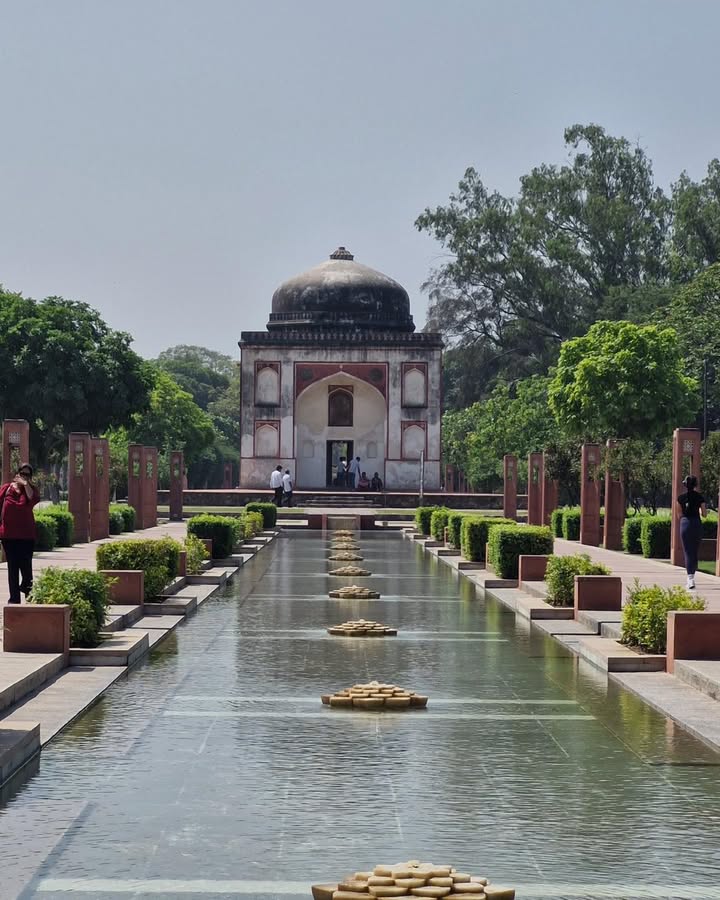
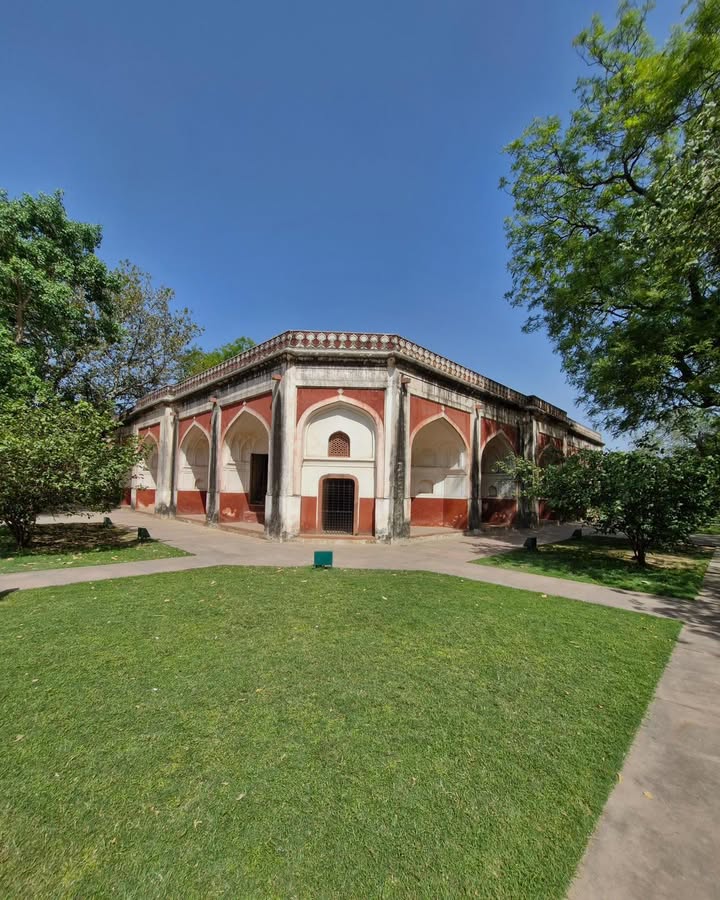
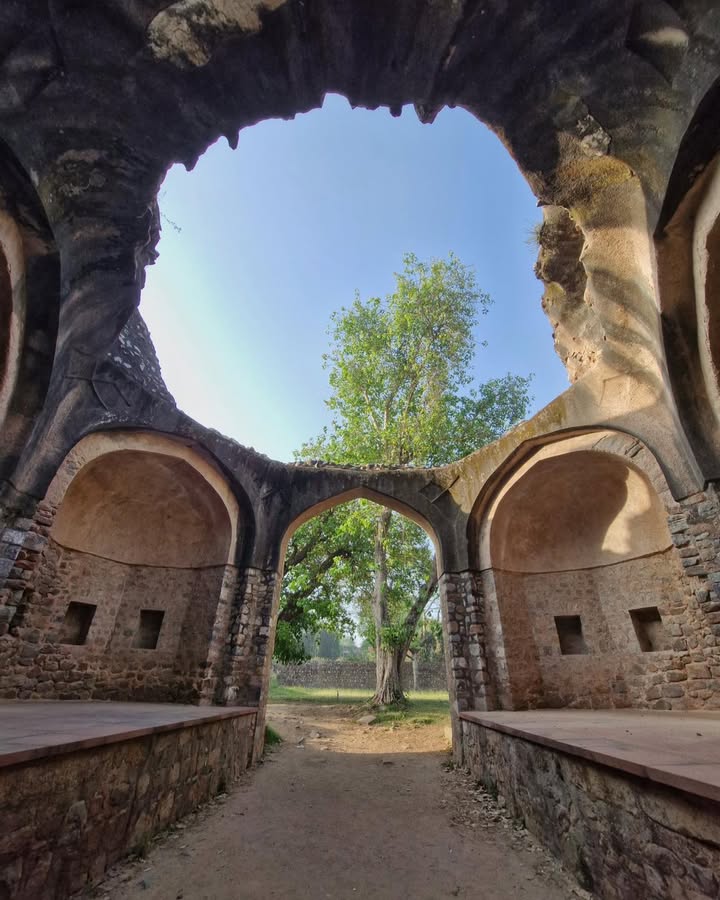
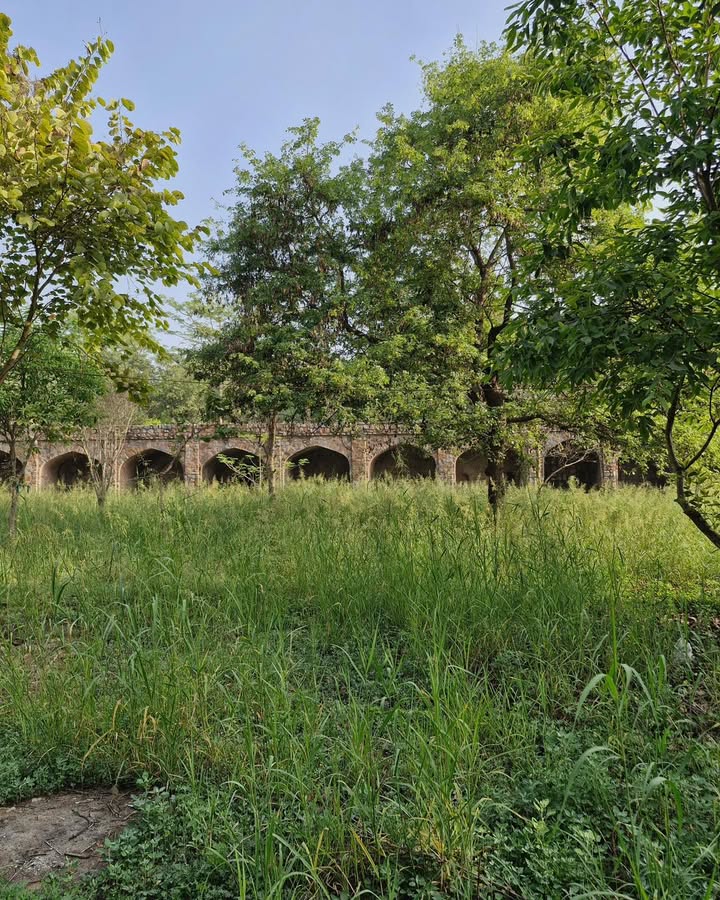
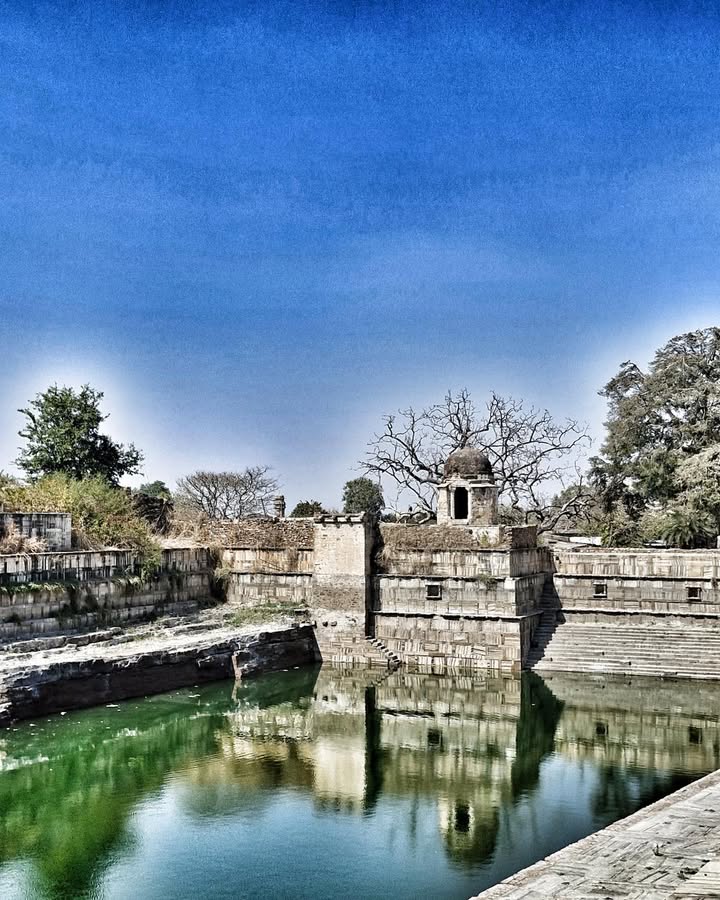
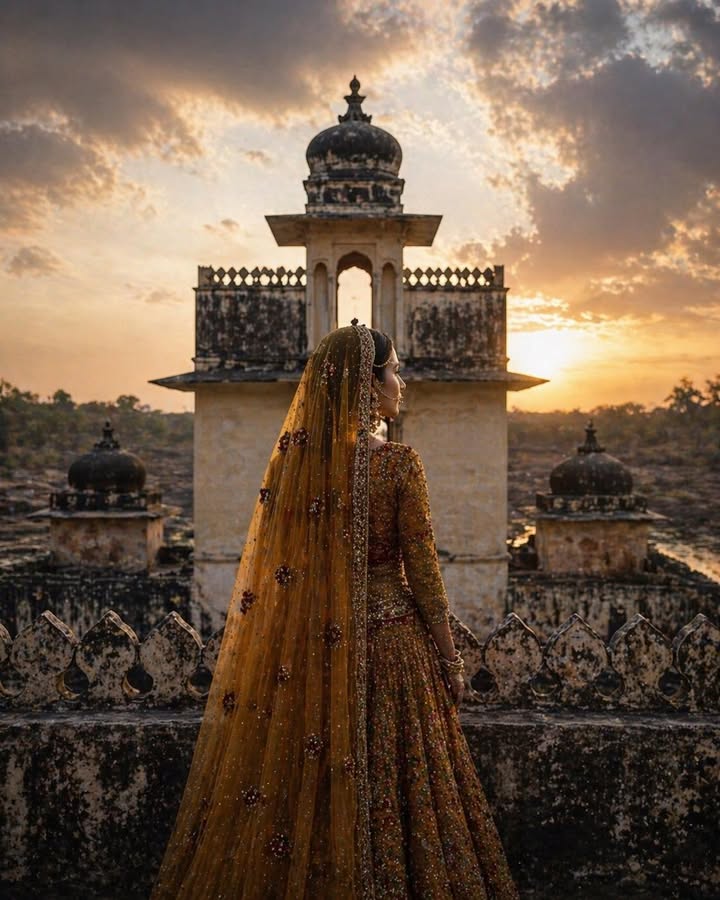

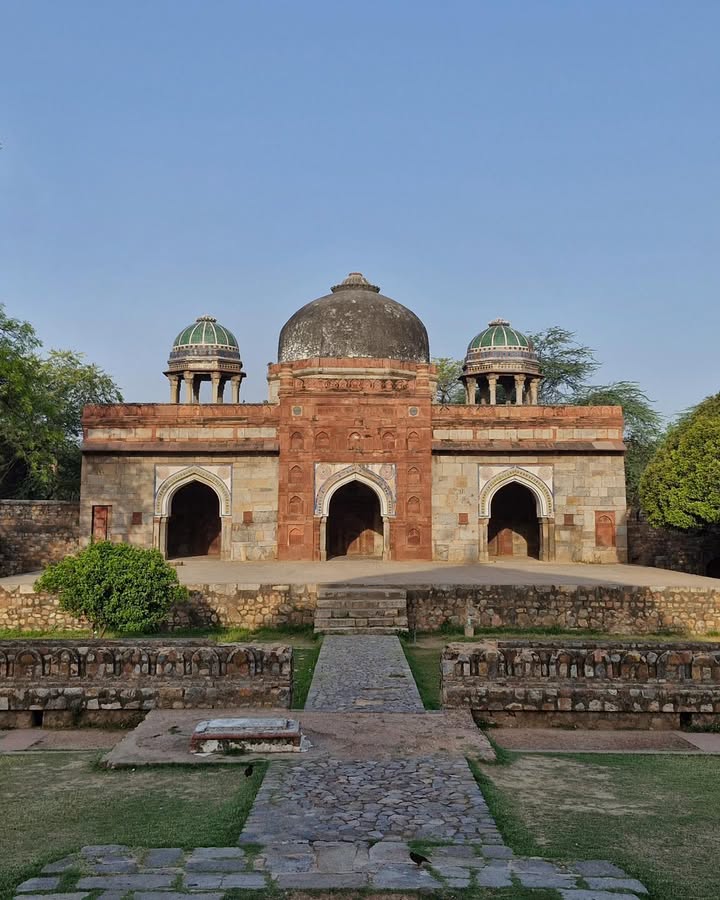









Darya Khan Mosque, Mandu.


Darya Khan Mosque, Mandu.
A Quiet Prayer Space of the Late Malwa Sultanate
Standing in quiet dignity near the royal zone of Mandu, close to Hathi Mahal, the Darya Khan Mosque reflects the softer, more restrained architectural spirit of the late Malwa Sultanate.
The mosque is dated to the early 16th century (c. 1510–1526 CE) and is associated with Darya Khan, a senior noble and courtier during the reign of Sultan Mahmud Khilji II. Unlike Mandu’s grand congregational mosques, this structure was conceived as a small, refined place of prayer, intended for limited use rather than large public gatherings.
Built primarily of red sandstone, the mosque follows Mandu’s mature Indo-Islamic architectural idiom, where proportion and balance take precedence over scale. The prayer hall is defined by graceful arches and enclosed by stone jali screens, including distinctive octagonal lattice windows that allow filtered light and natural ventilation — a practical and aesthetic response to Mandu’s plateau climate.
Historical accounts and surviving fragments indicate that the interior once carried blue enameled tile work and geometric ornamentation, a decorative feature seen in several late Malwa monuments. The simple domed roofing and uncluttered layout create an atmosphere of calm devotion, free from excessive ornamentation.
Although situated within a larger historical precinct, the Darya Khan Mosque functions as an independent spiritual space, embodying the everyday religious life of Mandu’s elite during the Sultanate’s final years. Today, its quiet presence adds a contemplative layer to Mandu’s landscape of ruins, reminding visitors that faith here was expressed as much through restraint as through grandeur.
Coffee Table Book by StudioDharma
Discover Mandu and other forgotten heritage sites through deeply researched narratives and visual storytelling in ITIHASNAMA by StudioDharma.
Order your copy here:
दरिया खान की मस्जिद, मांडू
मालवा सल्तनत की एक शांत और संयमित इबादतगाह
मांडू के शाही स्मारकों के समीप, हाथी महल के पास स्थित दरिया खान की मस्जिद मालवा सल्तनत के अंतिम दौर की एक सादगीपूर्ण किंतु सुरुचिपूर्ण धार्मिक संरचना है।
इस मस्जिद का निर्माण 16वीं शताब्दी के आरंभ (लगभग 1510–1526 ई.) में माना जाता है और इसका संबंध दरिया खान से है, जो सुल्तान महमूद ख़िलजी द्वितीय के शासनकाल में एक वरिष्ठ दरबारी थे। यह मस्जिद विशाल जामा मस्जिदों के विपरीत, सीमित और निजी उपासना के लिए निर्मित प्रतीत होती है।
लाल पत्थर से निर्मित यह इमारत इंडो-इस्लामिक स्थापत्य शैली का संतुलित उदाहरण है। इसकी मेहराबें, पत्थर की जालियाँ और अष्टकोणीय खिड़कियाँ भीतर प्रकाश और हवा का सौम्य प्रवाह सुनिश्चित करती हैं। आंतरिक भाग में आज भी नीली तामचीनी टाइलों और ज्यामितीय अलंकरणों के अवशेष दिखाई देते हैं।
सरल गुंबद और खुला आंतरिक विन्यास इस मस्जिद को भव्यता के बजाय शांति और आत्मिक स्थिरता प्रदान करता है। यद्यपि यह एक ऐतिहासिक परिसर के भीतर स्थित है, फिर भी मस्जिद का स्वरूप इसे एक स्वतंत्र इबादतगाह के रूप में स्थापित करता है।
दरिया खान की मस्जिद मांडू की उस विरासत को दर्शाती है जहाँ स्थापत्य, आस्था और संयम एक साथ दिखाई देते हैं।
स्टूडियोधर्मा की कॉफी टेबल बुक
ITIHASNAMA — इतिहास, शोध और दृश्य कथा का संगम।
अपनी प्रति यहाँ से ऑर्डर करें: