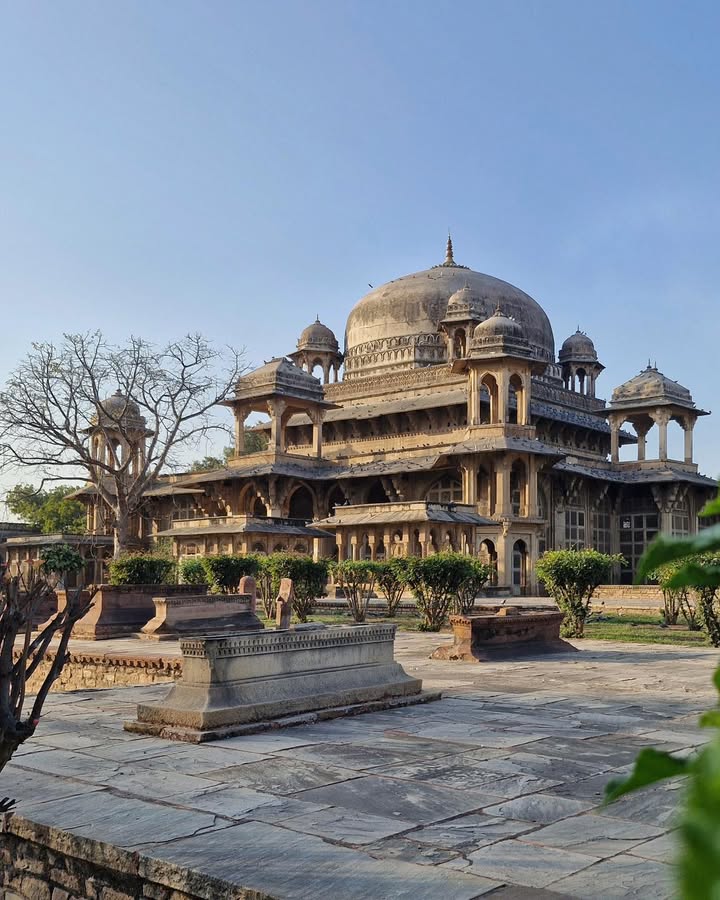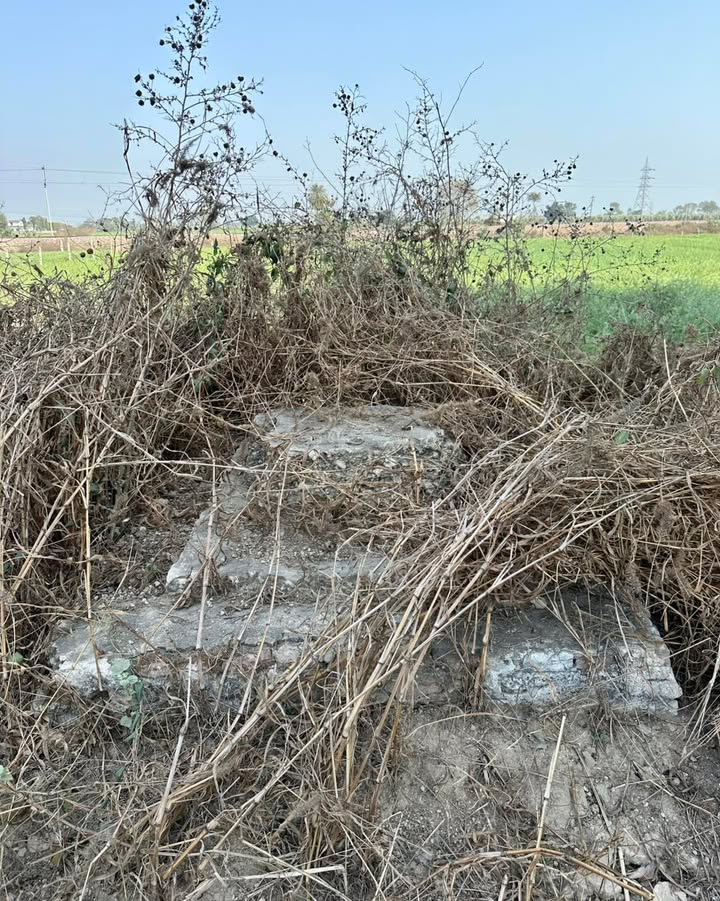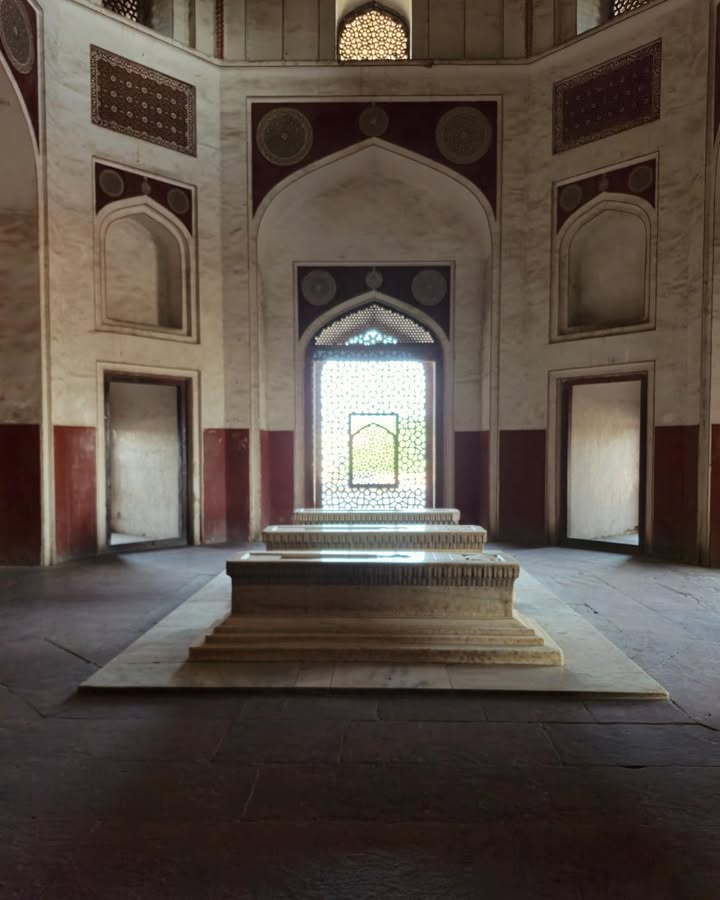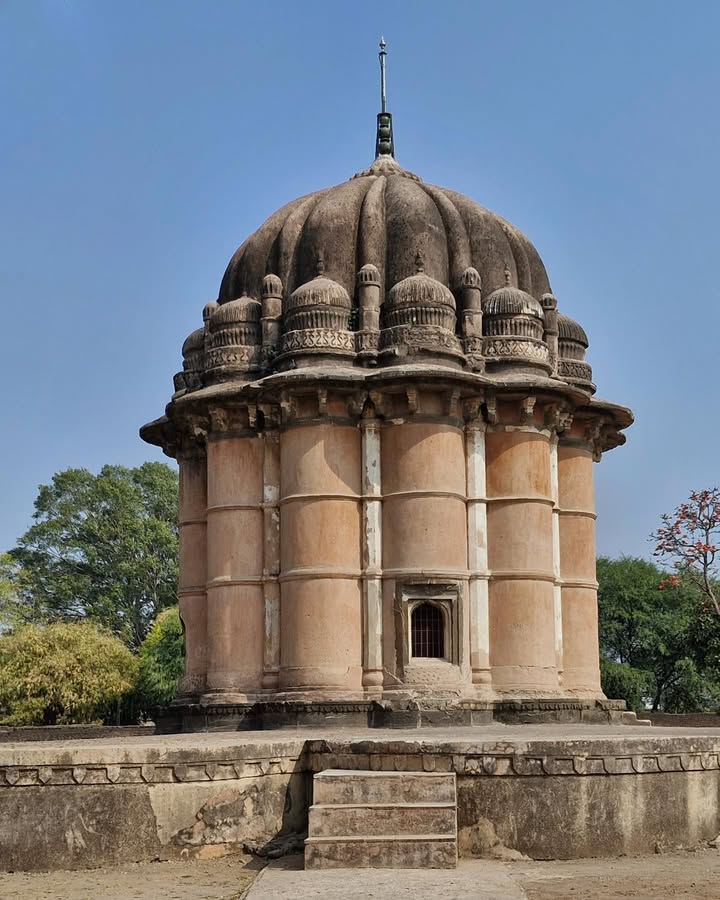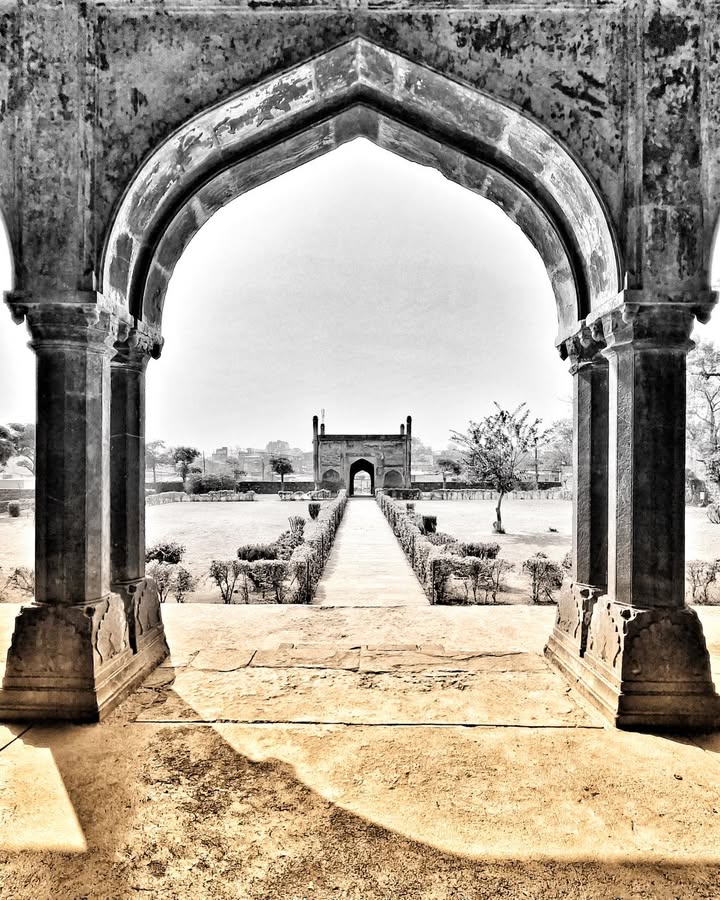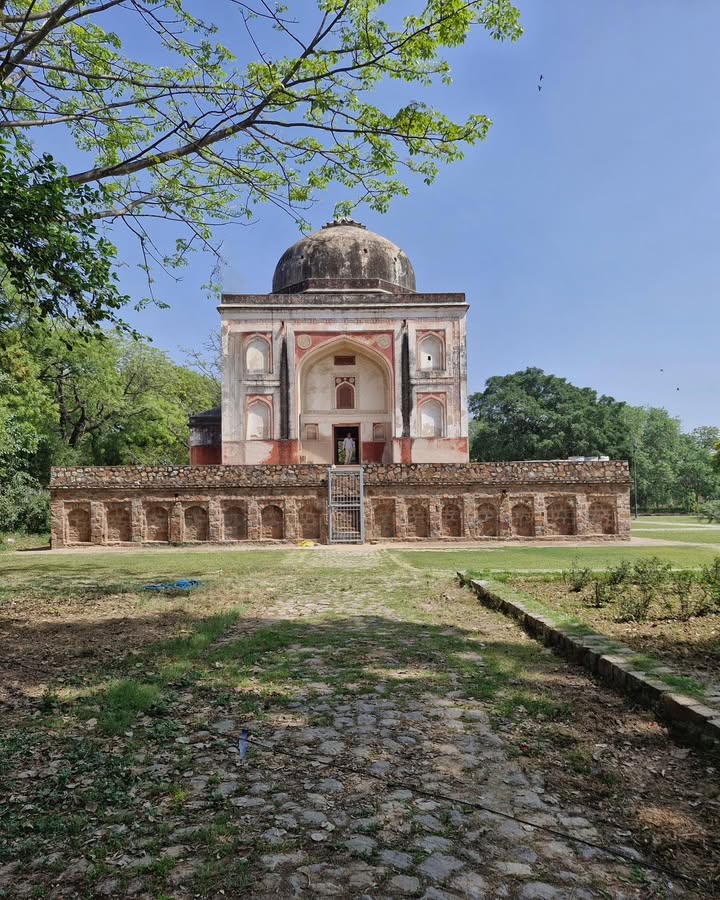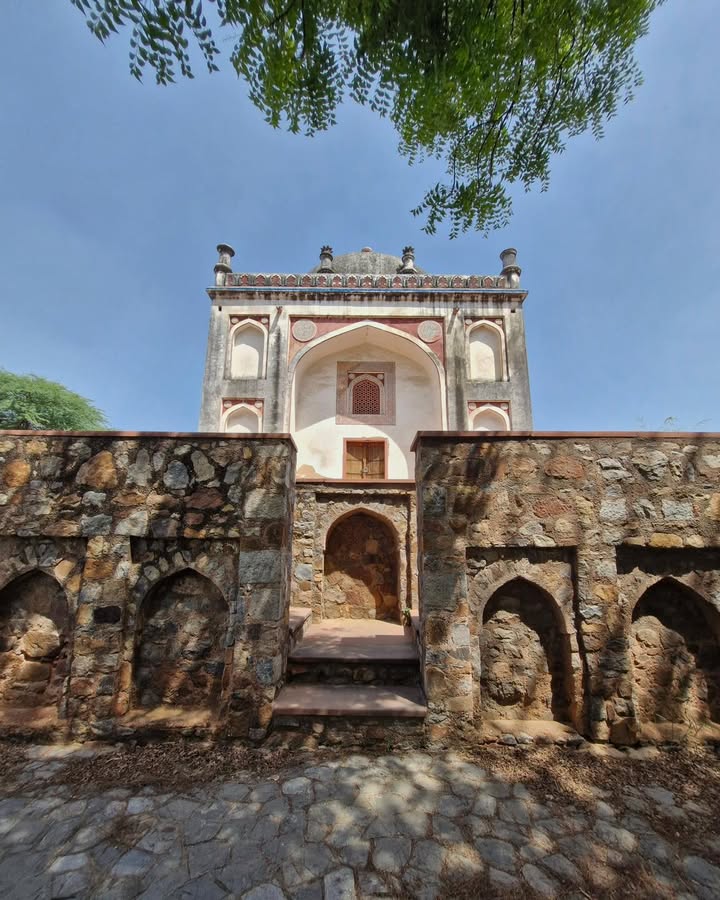
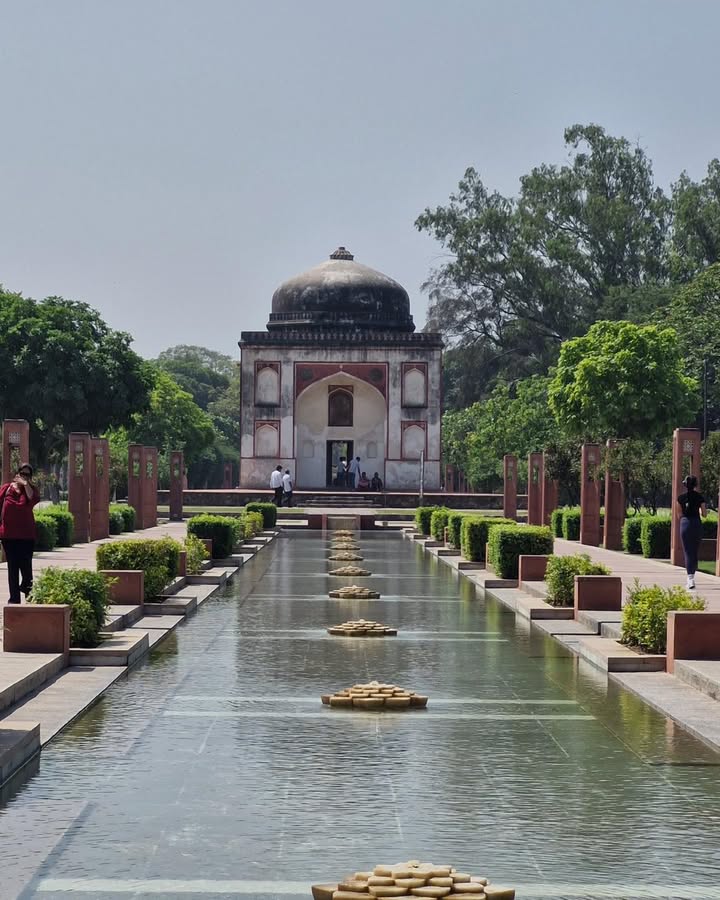
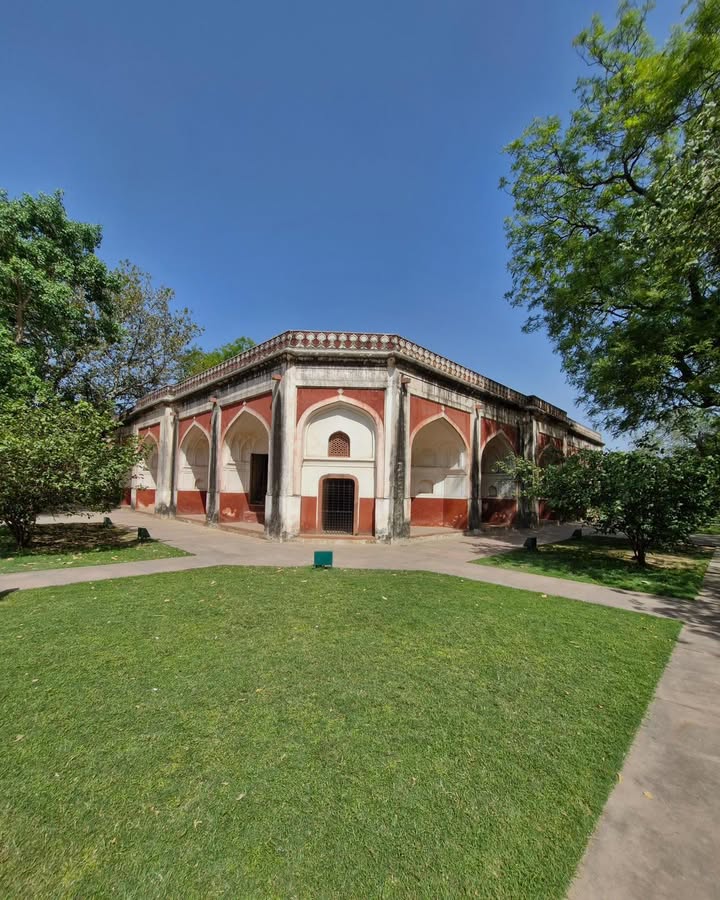
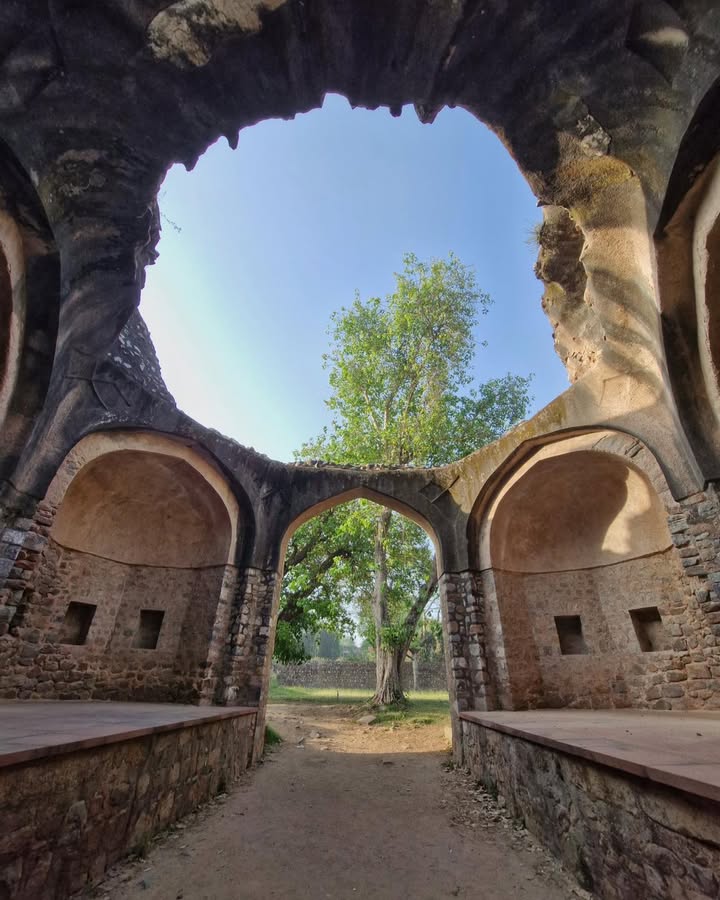
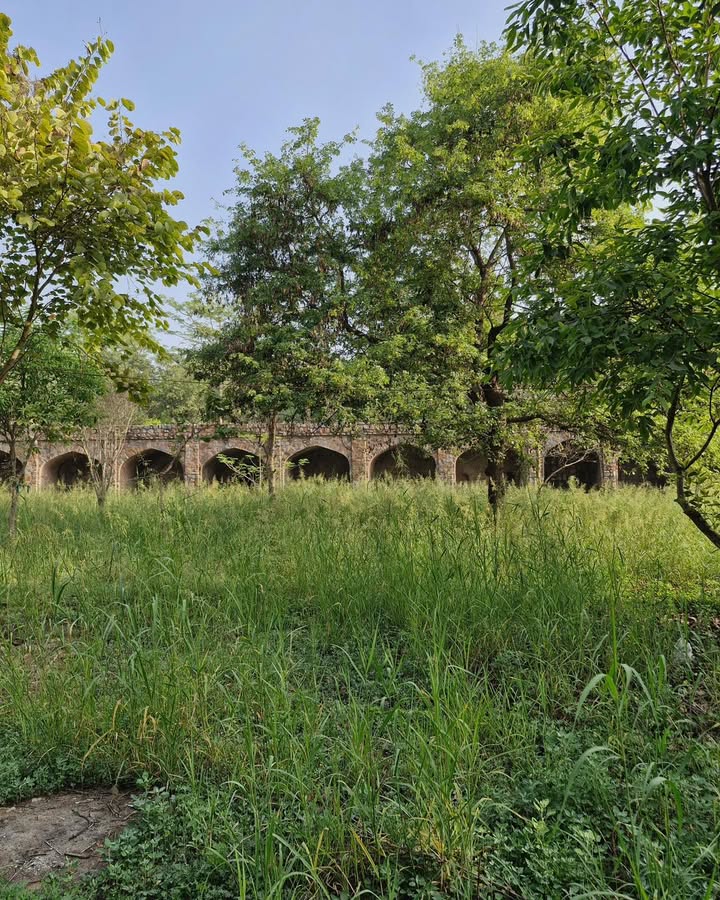
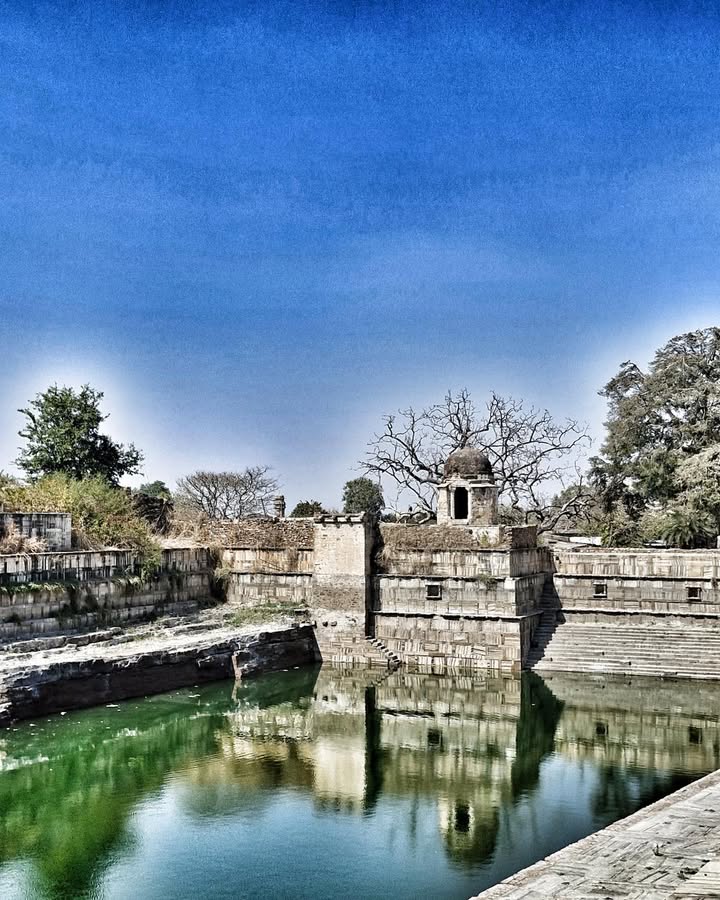

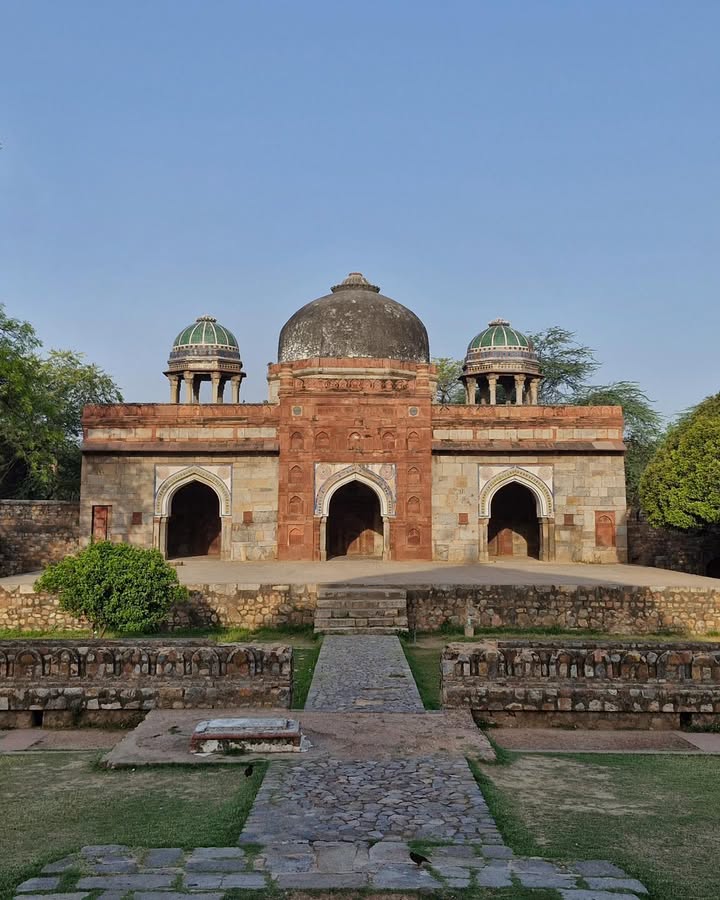











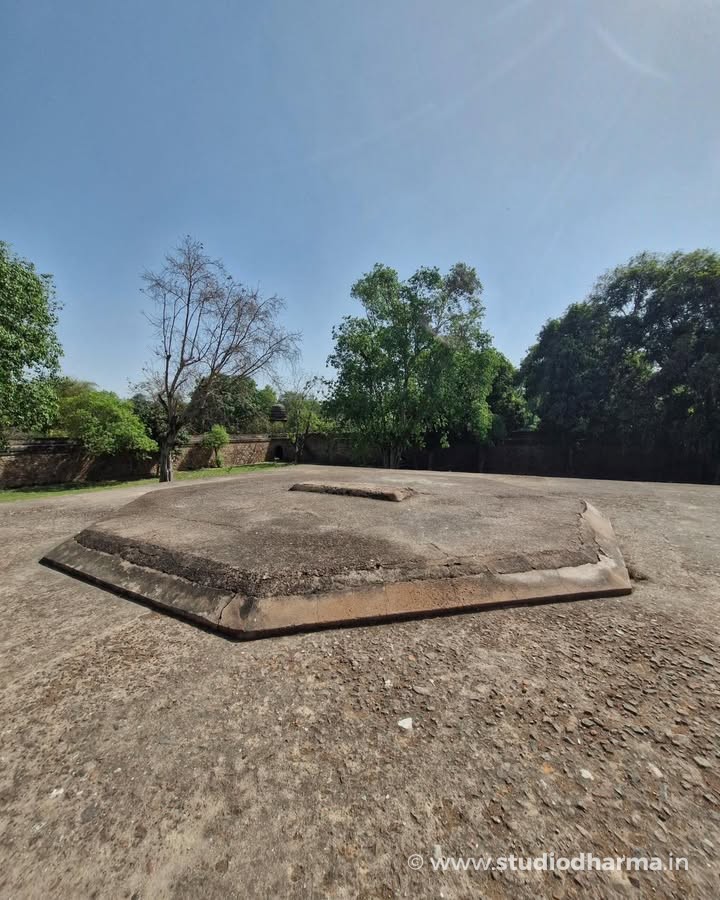
Bu Halima’s Tomb, Delhi.
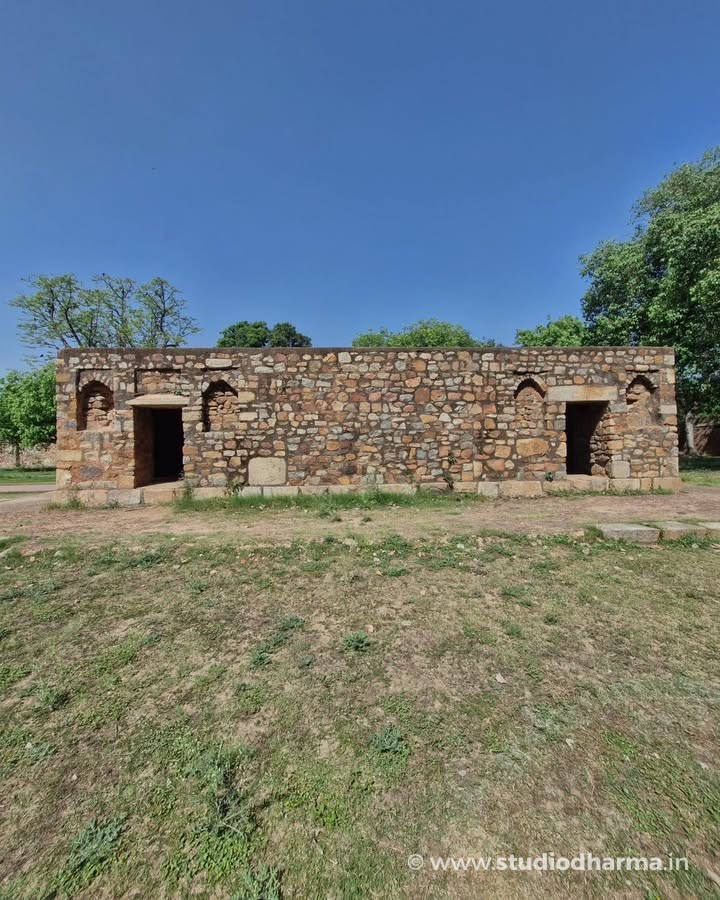
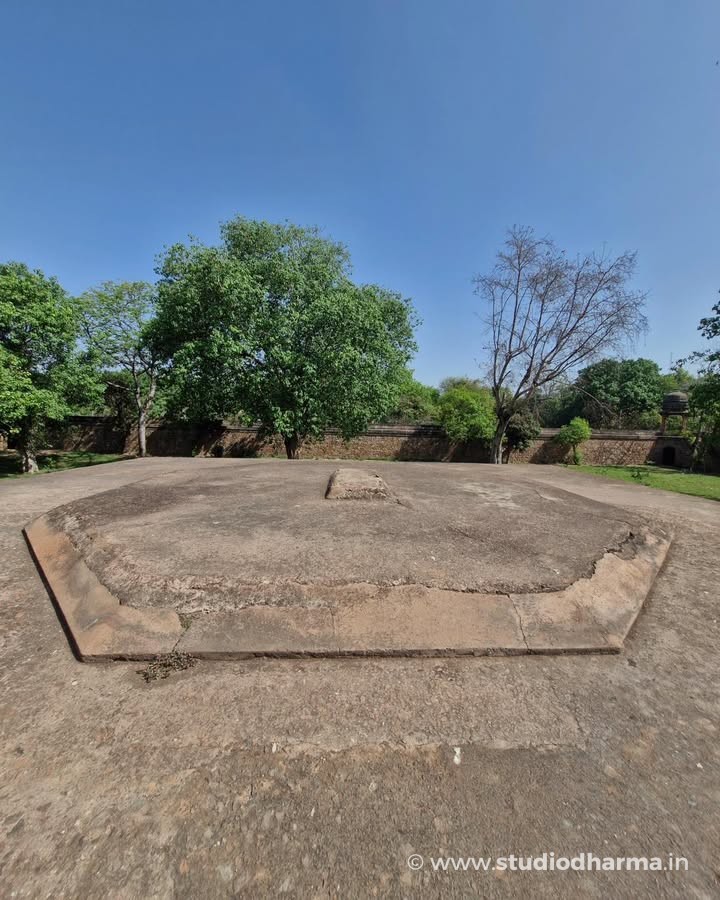
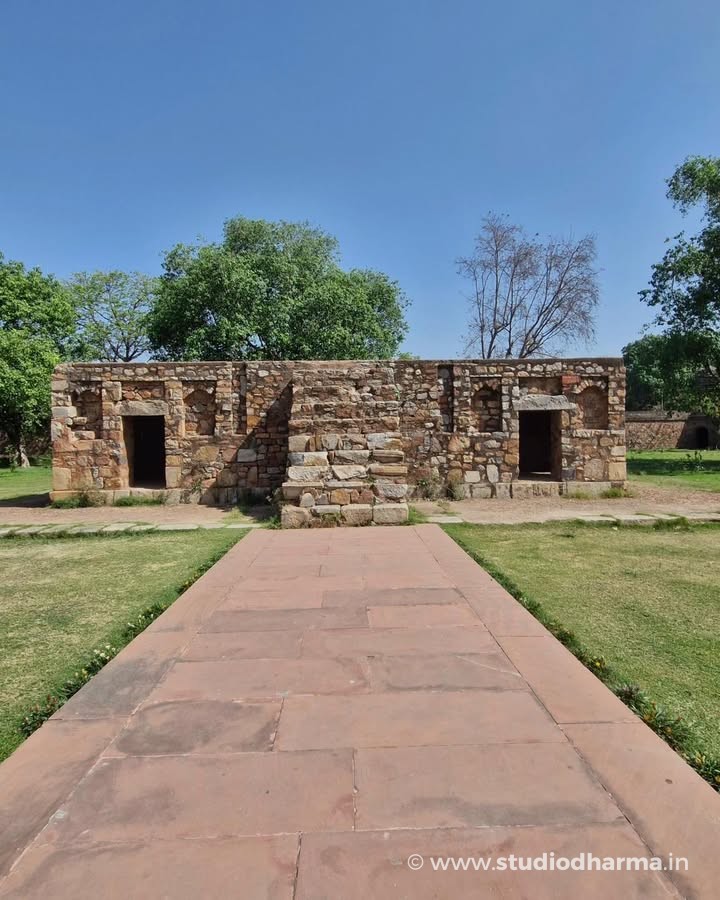
Bu Halima’s Tomb, Delhi.
At the entrance to Humayun’s Tomb in Delhi lies a quiet enclosure that most visitors walk past without a second glance.
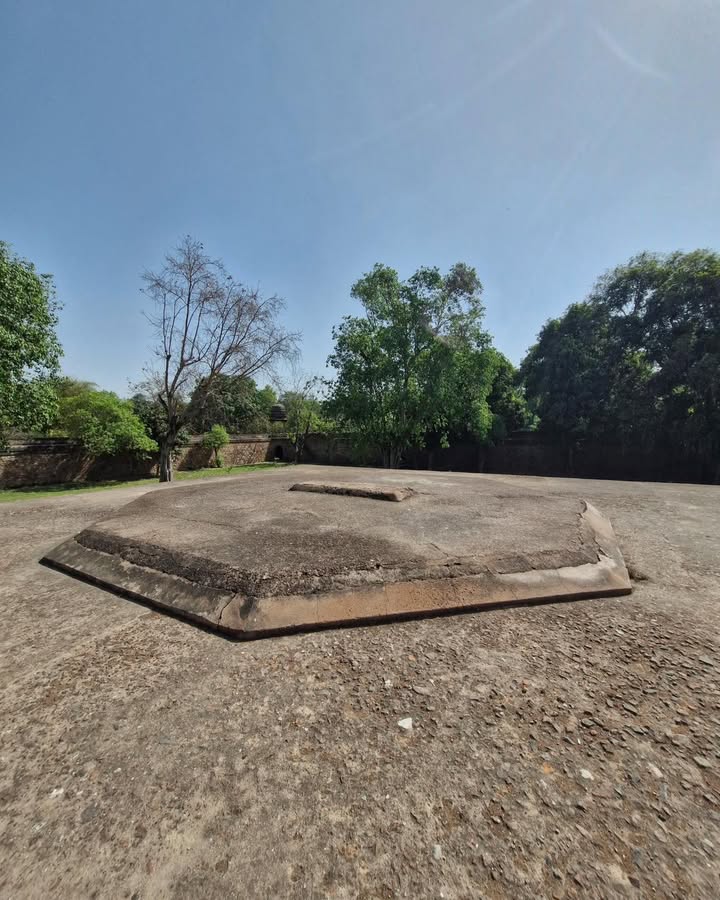
A neat pathway cuts through a serene garden, leading to the weathered remains of a forgotten tomb. There is no towering dome, no marble grandeur, and no crowds. Only an octagonal platform under the open sky and a name wrapped in mystery — Bu Halima.
Who was she?
History offers no certain answer.
Bu Halima is believed to have held an important place in Humayun’s household and may have accompanied Emperor Babur’s entourage to India. Scholars generally identify her as either Humayun’s wet nurse (foster mother) or a respected Mughal noblewoman. Whatever her exact role, she must have occupied an extraordinary position, for few individuals were honoured with a garden and tomb placed so close to the resting place of an emperor.
The most intriguing feature of this site is its unusual layout. Unlike most Mughal garden-tombs, where the mausoleum stands at the very centre, Bu Halima’s tomb is positioned toward one end of the enclosure. This has led historians to believe that the garden may have existed first, and the tomb was added later.
Climb the modest staircase and you reach the roof, where an octagonal platform marks her burial place. Behind the structure, small corner bastions survive, some still preserving traces of blue, green and yellow tile work that once added colour to this understated monument.
Today, thousands enter Humayun’s Tomb through Bu Halima’s Garden, often unaware that they are first passing through the memorial of a woman whose identity has faded into history, but whose importance was great enough to be remembered beside one of the Mughal Empire’s most magnificent monuments.
ITIHASNAMA by StudioDharma is a premium coffee table book featuring 25 meticulously researched stories from the forgotten history of Meerut. To order your copy, visit:�
बू हलीमा का मक़बरा, दिल्ली
हुमायूँ के मक़बरे के प्रवेश द्वार पर एक शांत परिसर स्थित है, जिसे अधिकांश लोग बिना ध्यान दिए पार कर जाते हैं।
एक सुव्यवस्थित बाग़, उसके बीच से गुजरती पगडंडी, और अंत में एक साधारण-सा ढांचा। न संगमरमर की भव्यता, न ऊँचा गुम्बद, न पर्यटकों की भीड़। केवल खुले आकाश के नीचे एक अष्टकोणीय चबूतरा और एक नाम— बू हलीमा।
वह कौन थीं?
इतिहास आज भी इस प्रश्न का निश्चित उत्तर नहीं दे पाया है।
माना जाता है कि बू हलीमा का हुमायूँ के शाही परिवार में अत्यंत सम्मानित स्थान था और संभवतः वे बाबर के साथ भारत आई थीं। इतिहासकार उन्हें प्रायः हुमायूँ की धाय माता (पालन करने वाली स्त्री) अथवा एक प्रतिष्ठित मुगल कुलीन महिला के रूप में देखते हैं। उनकी वास्तविक पहचान चाहे जो रही हो, इतना स्पष्ट है कि उन्हें असाधारण सम्मान प्राप्त था, तभी उनका बाग़ और मक़बरा हुमायूँ के मक़बरे के निकट स्थापित किया गया।
इस स्थल की सबसे रोचक बात इसका विन्यास है। अधिकांश मुगल बाग़-मक़बरों में समाधि बाग़ के केंद्र में होती है, परंतु यहाँ मक़बरा एक किनारे स्थित है। इससे यह अनुमान लगाया जाता है कि पहले बाग़ बनाया गया और बाद में मक़बरा जोड़ा गया।
सीढ़ियाँ चढ़कर ऊपर पहुँचने पर एक अष्टकोणीय मंच दिखाई देता है, जिसके मध्य में बू हलीमा की समाधि स्थित है। पीछे की ओर छोटे बुर्ज हैं, जिन पर आज भी नीले, हरे और पीले टाइलों के अवशेष दिखाई देते हैं।
आज हज़ारों लोग हुमायूँ के मक़बरे में प्रवेश करते समय इस बाग़ से होकर गुजरते हैं, पर बहुत कम लोग जानते हैं कि वे सबसे पहले उस महिला की स्मृति को पार कर रहे होते हैं, जिसकी पहचान इतिहास में धुंधली हो चुकी है, किंतु जिसका सम्मान इतना महान था कि उसे एक सम्राट के समीप स्थान मिला।
StudioDharma की प्रीमियम कॉफी टेबल बुक ITIHASNAMA में मेरठ के भूले-बिसरे इतिहास की 25 शोधपूर्ण कहानियाँ संकलित हैं। अपनी प्रति मँगाने के लिए यहाँ जाएँ:�