












HAWA MAHAL HAVELI, DOGHAT (BAGHPAT) – THE FORGOTTEN HAVEN OF COLONIAL-ERA MURALS.
HAWA MAHAL HAVELI, DOGHAT (BAGHPAT) – THE FORGOTTEN HAVEN OF COLONIAL-ERA MURALS.
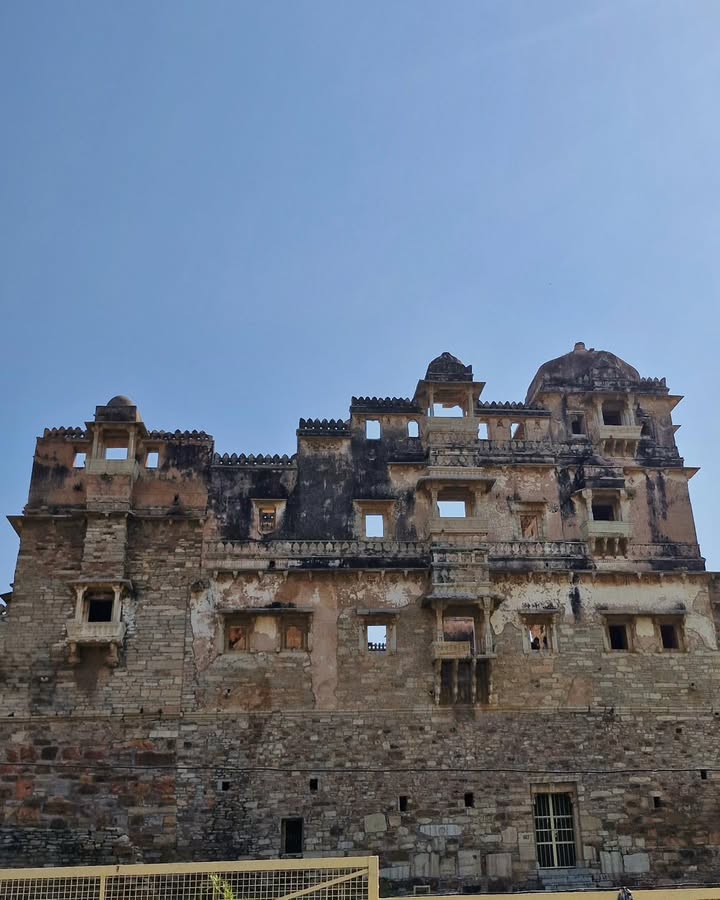
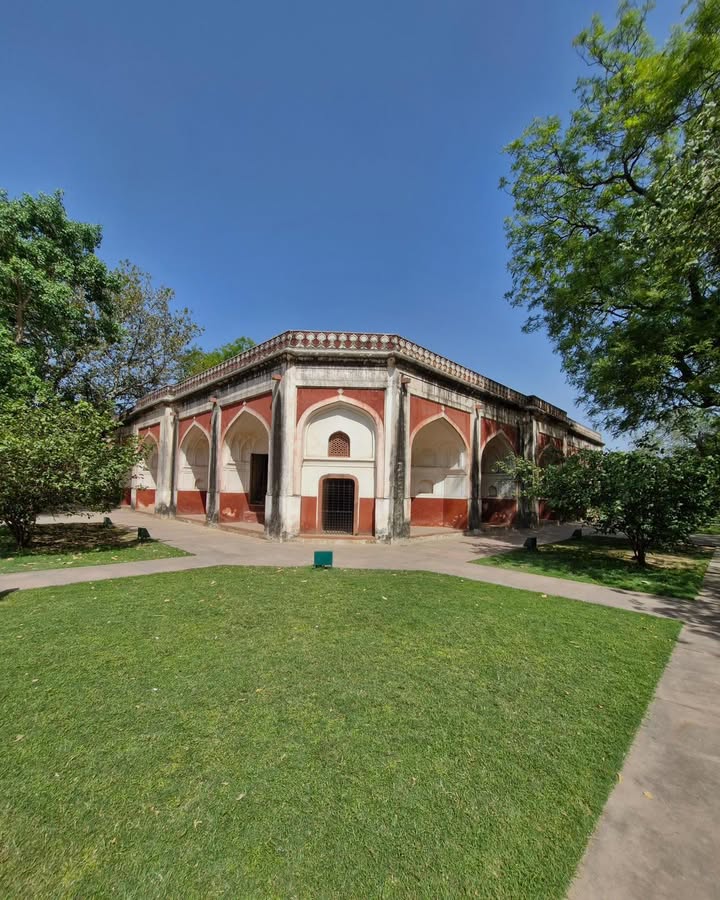
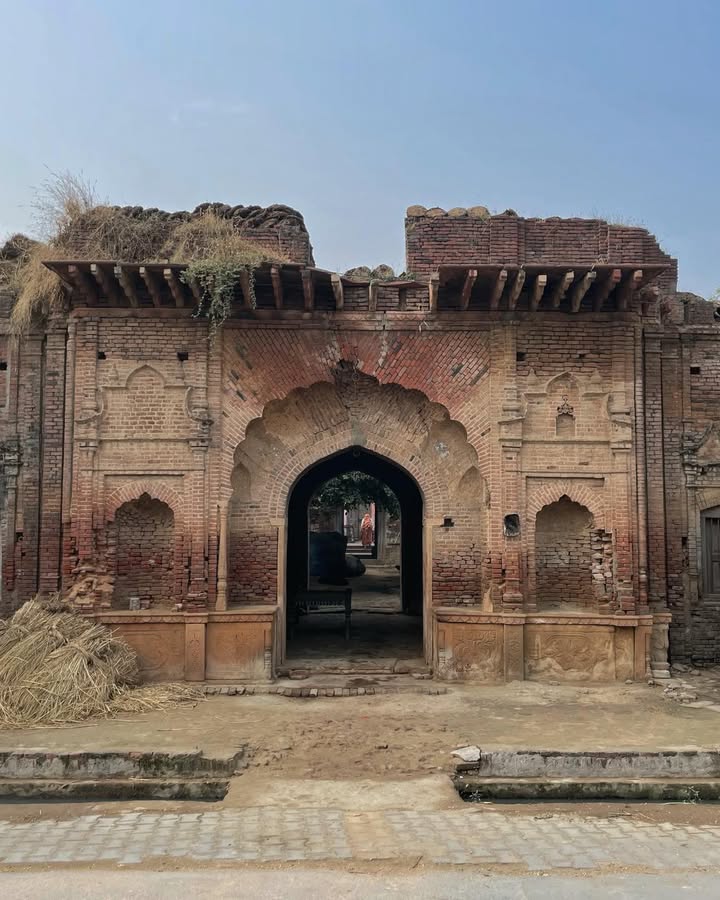
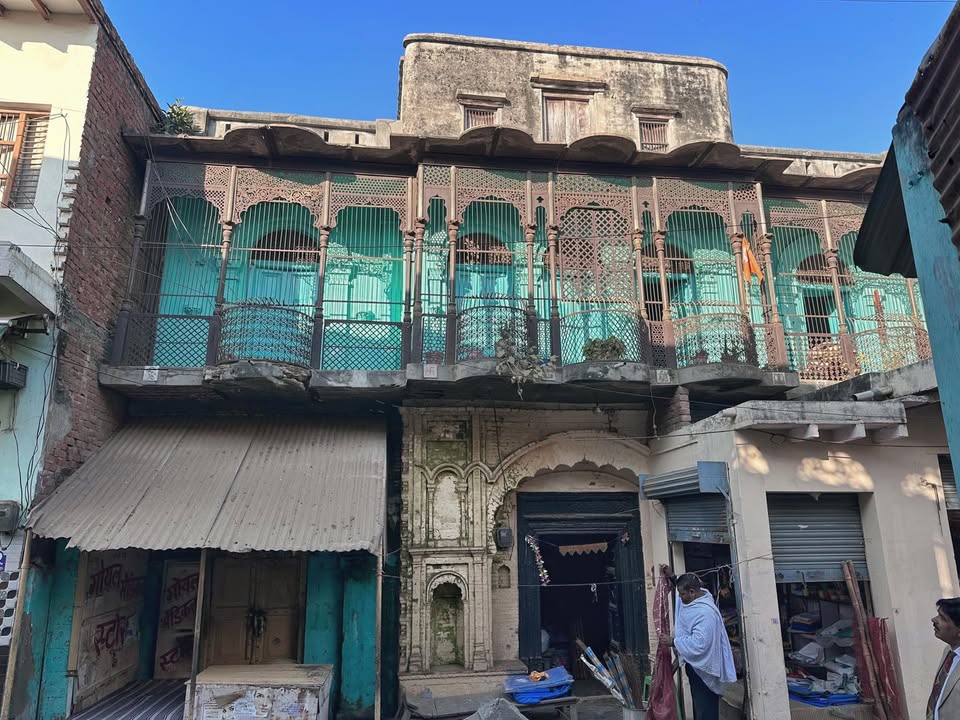
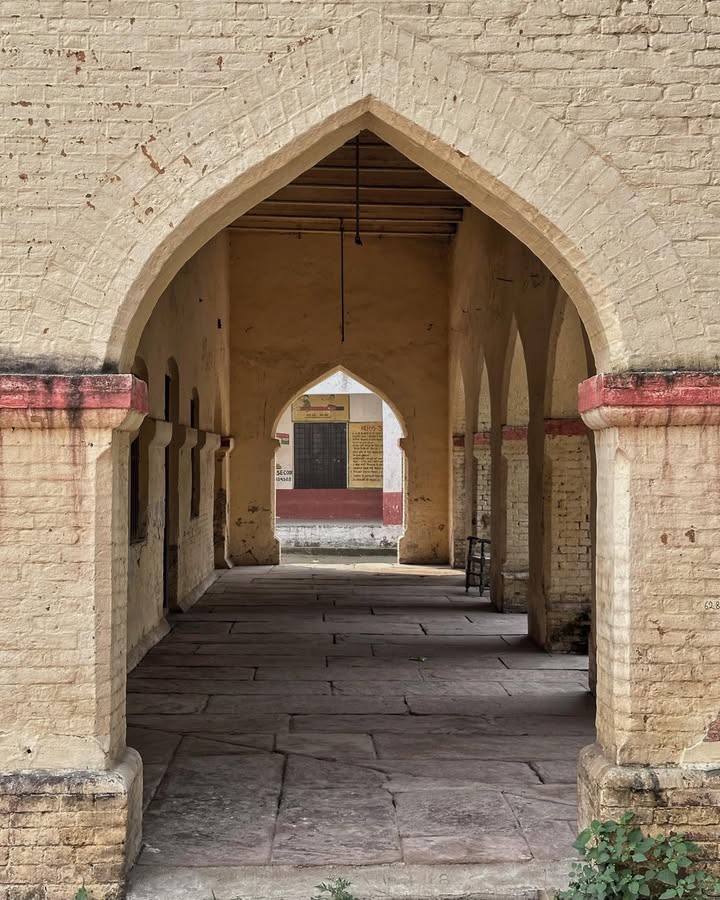
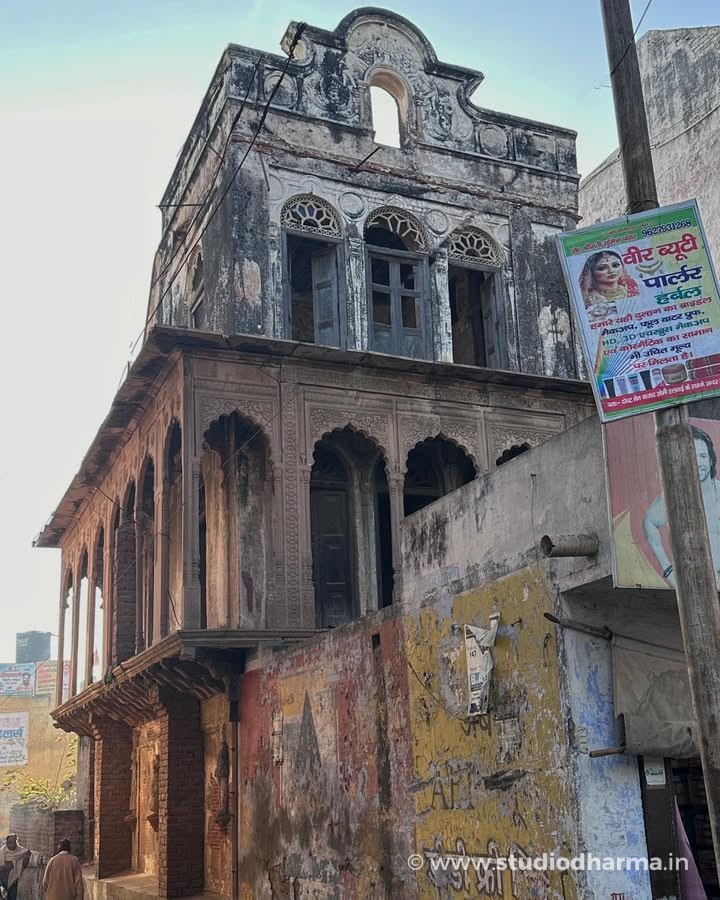
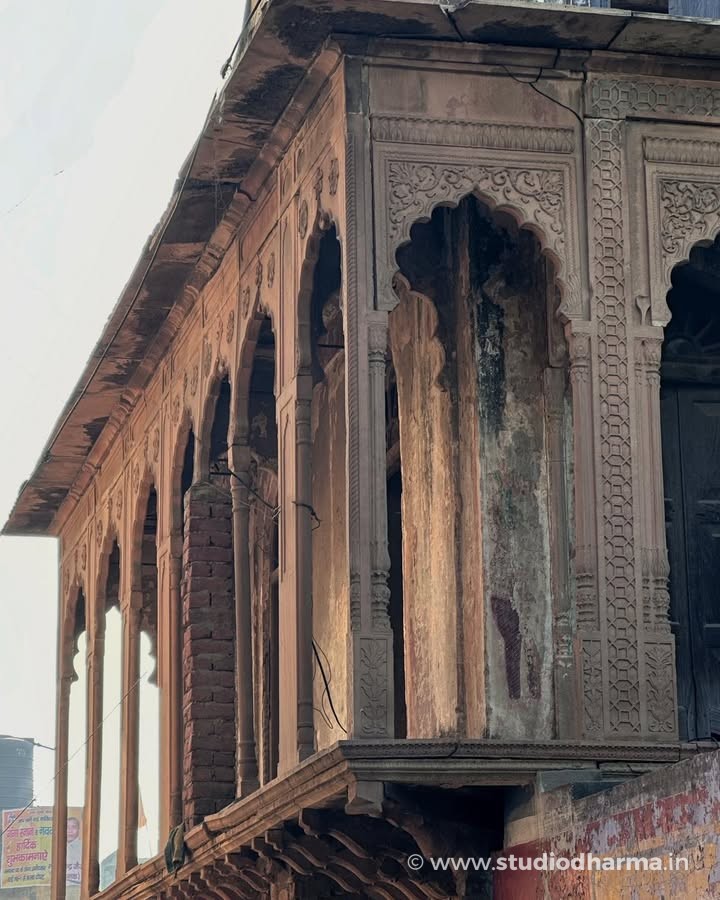
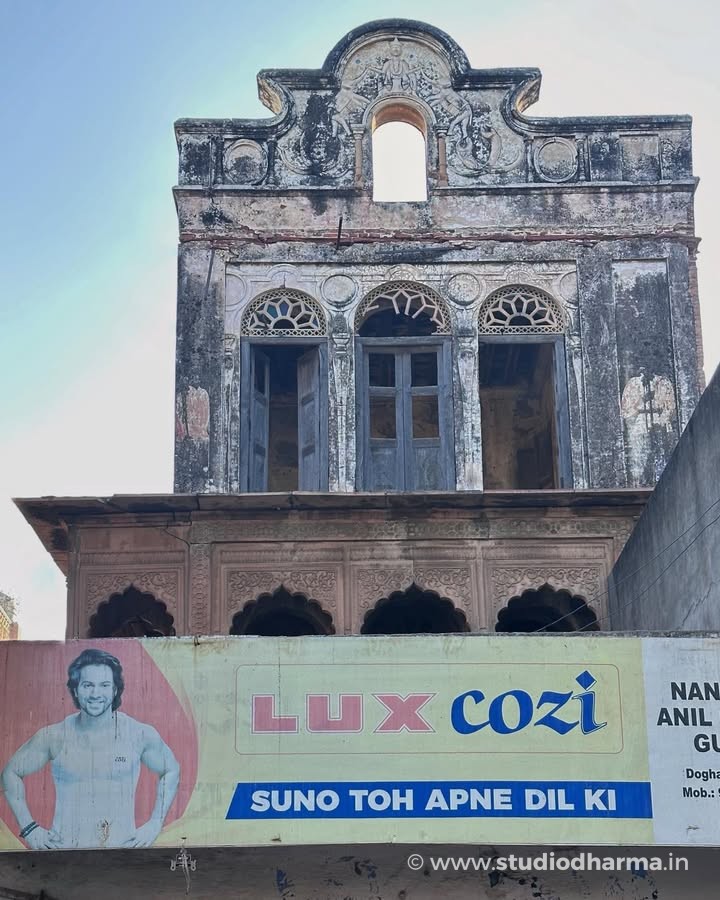
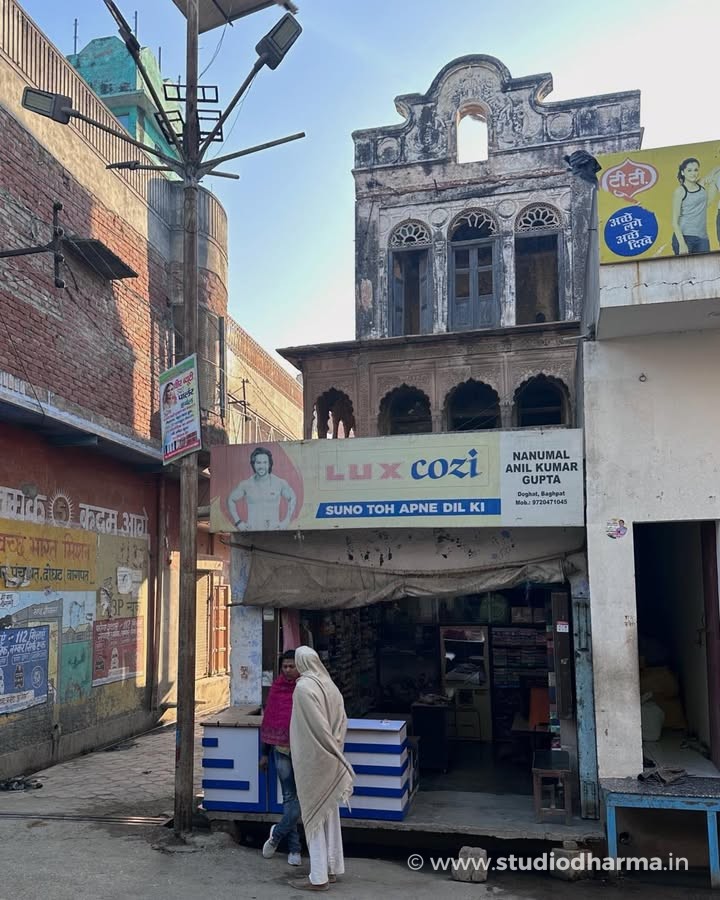
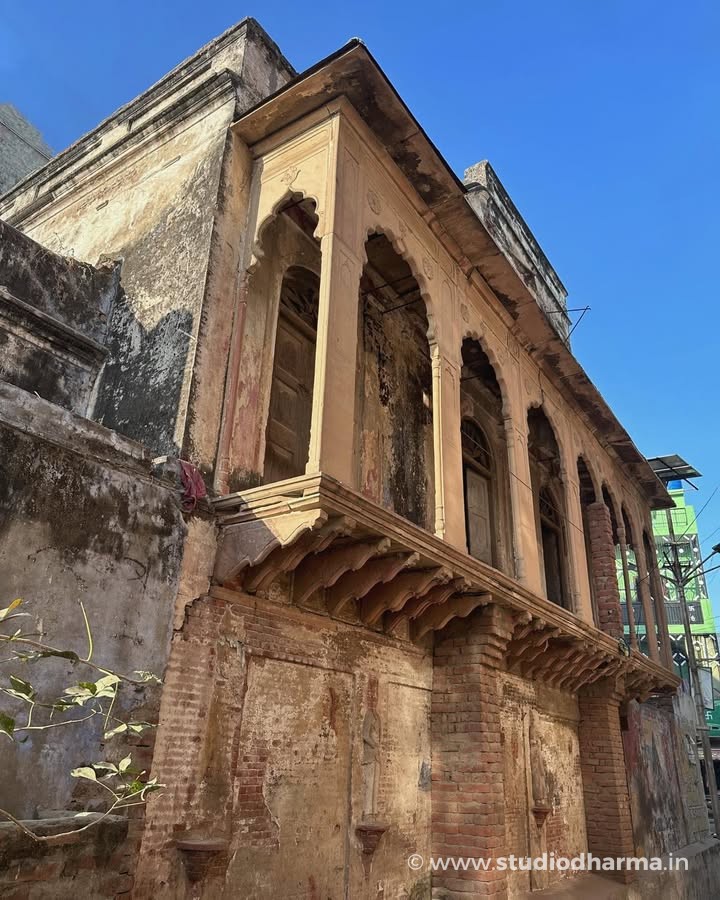
In the quiet town of Doghat in Baghpat district stands an abandoned haveli that locals have long called “Hawa Mahal.” The name comes from its airy façade and open arches that once allowed cool breezes to move freely through the structure.
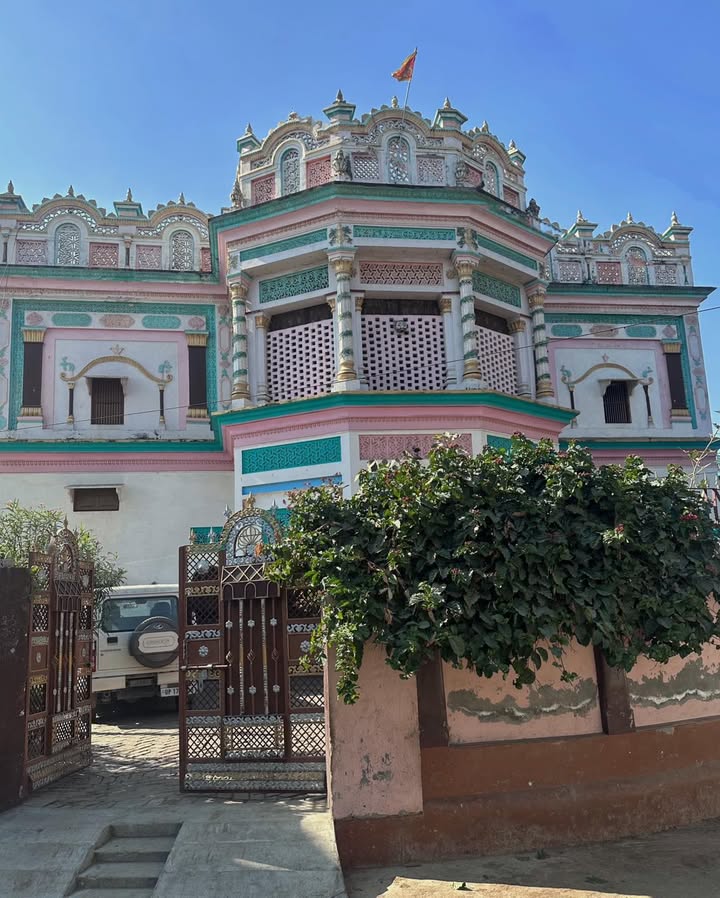
This haveli once belonged to Lala Jugal Kishore, a prosperous merchant of the region. Built during the late nineteenth or early twentieth century, the residence reflects the architectural taste of wealthy trading families of western Uttar Pradesh. Elegant arches, decorative plaster panels and the distinctive upper façade still hint at the grandeur it once possessed.
Yet the true soul of this haveli lies inside its fading walls.
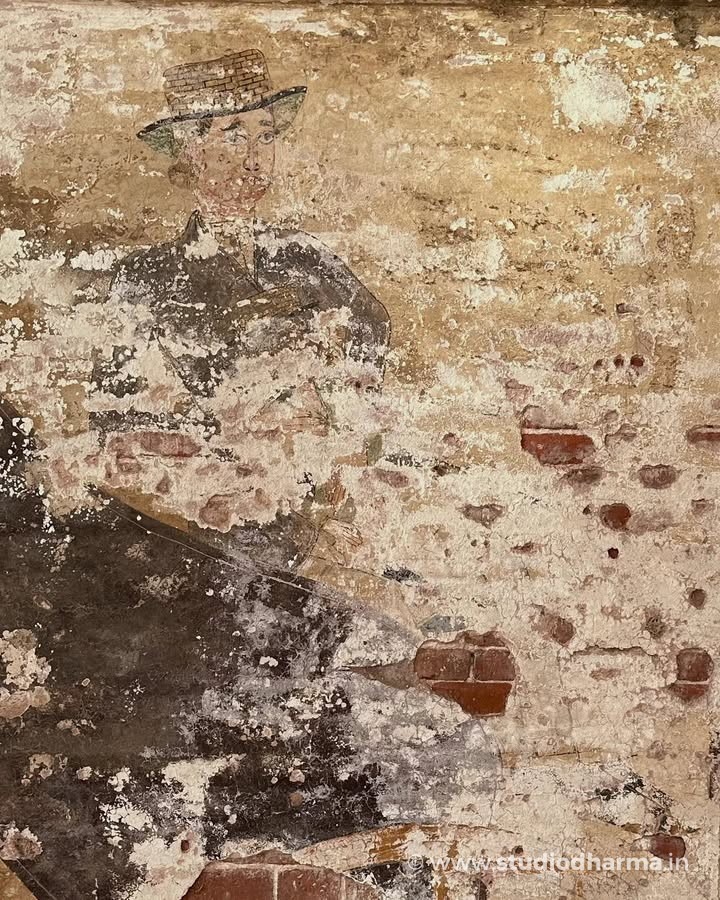
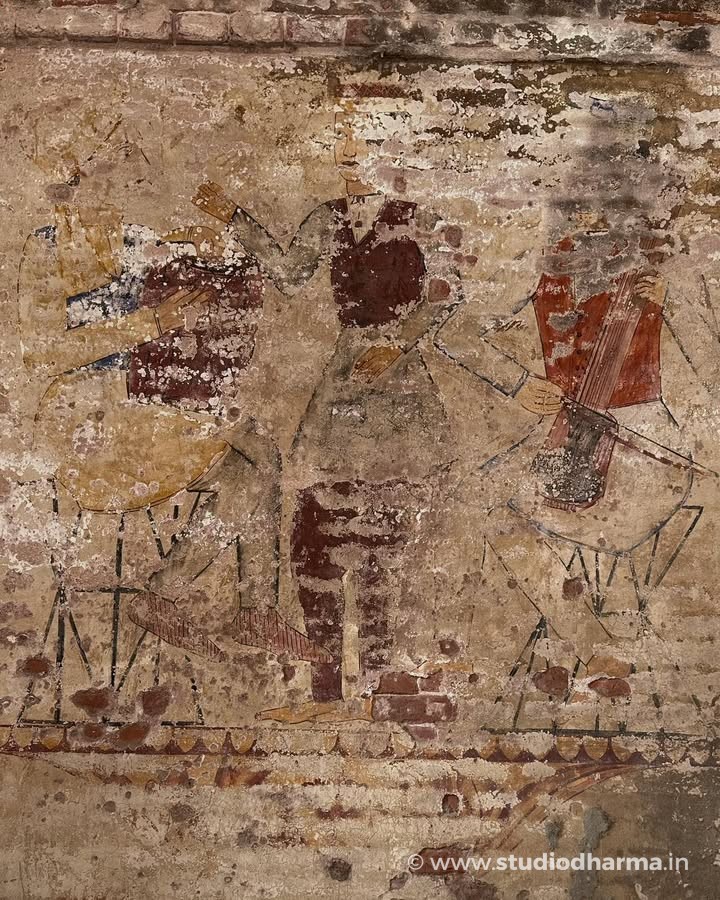
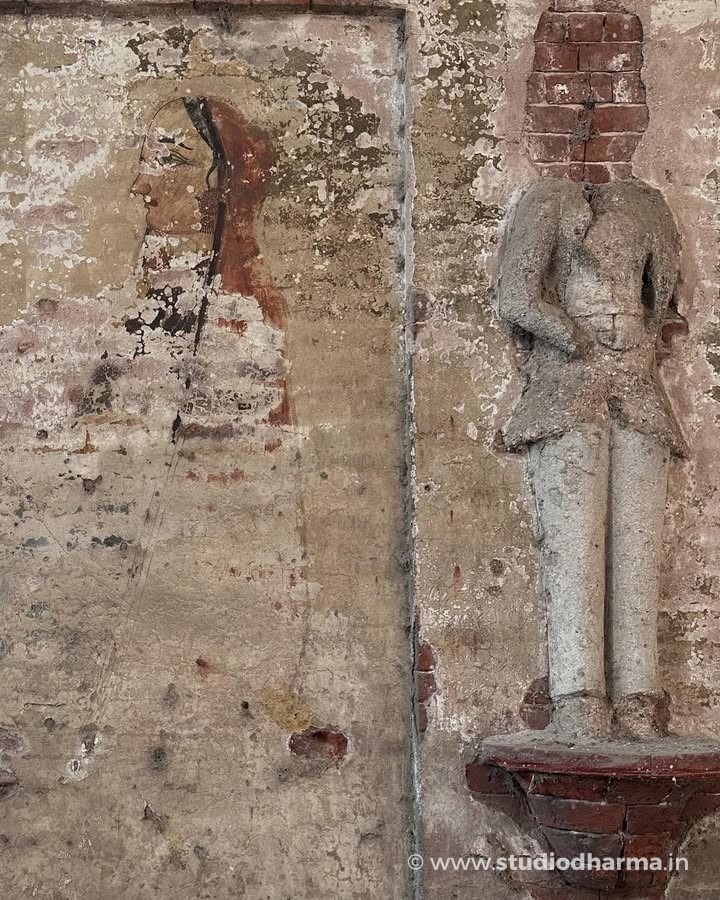
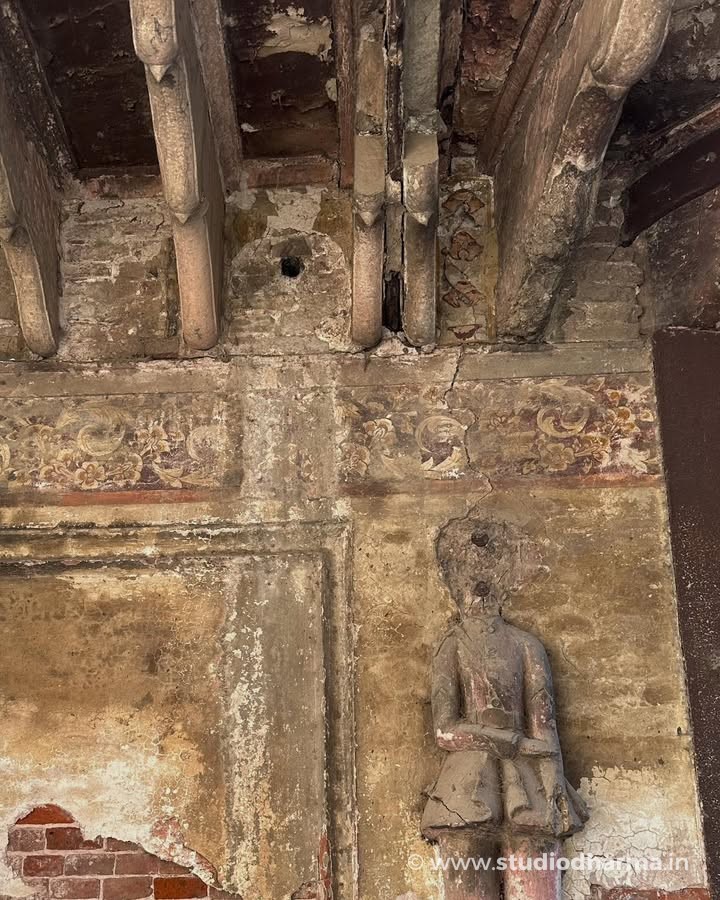
Hidden beneath layers of peeling plaster survive fragments of remarkable lime-plaster wall murals. Though severely damaged by time and neglect, these paintings still reveal glimpses of another era.
One wall still preserves the figure of a European gentleman dressed in colonial attire, reflecting how British imagery entered local artistic traditions during the colonial period. Nearby, another mural shows musicians playing traditional instruments, perhaps representing gatherings and celebrations that once filled this haveli with music. In another corner survives a delicate side-profile portrait of a woman painted in a style reminiscent of North Indian miniature traditions.
These artworks were created using the fresco-secco technique, where pigments were applied on dry lime plaster – a method widely used in haveli wall paintings across northern India.
Today the haveli stands silent. Its owners migrated to Delhi many years ago, and the once vibrant residence gradually slipped into ruin. Plaster crumbles, colours fade, yet the murals continue to hold onto the past with quiet resilience.
Buildings like this are more than structures. They are fragile archives of everyday history, and within these fading walls survives a small but powerful memory of a forgotten world.
StudioDharma
Discover the heritage stories of Meerut through the coffee table book ITIHASNAMA by StudioDharma, featuring 25 curated historical narratives of the city.
Purchase here:
हवा महल हवेली, डोगहट (बागपत) – औपनिवेशिक दौर की भित्ति चित्रों की एक भूली हुई विरासत
बागपत ज़िले के छोटे से कस्बे डोगहट में एक पुरानी हवेली आज भी खड़ी है, जिसे स्थानीय लोग वर्षों से “हवा महल” के नाम से जानते हैं। यह नाम इसकी हवादार बनावट और खुली मेहराबों के कारण पड़ा, जहाँ से कभी हवा पूरे भवन में सहजता से बहती थी।
यह हवेली कभी इस क्षेत्र के समृद्ध व्यापारी लाला जुगल किशोर की थी। उन्नीसवीं सदी के उत्तरार्ध या बीसवीं सदी के प्रारंभ में निर्मित यह भवन पश्चिमी उत्तर प्रदेश के समृद्ध व्यापारिक परिवारों की स्थापत्य रुचि को दर्शाता है। इसकी सुंदर मेहराबें, सजावटी प्लास्टर और ऊपरी भाग की विशिष्ट बनावट आज भी उसके पुराने वैभव की झलक देती है।
लेकिन इस हवेली की असली आत्मा इसकी दीवारों में छिपी है।
झड़ती हुई प्लास्टर की परतों के बीच आज भी कुछ स्थानों पर पुराने भित्ति-चित्र दिखाई देते हैं। समय और उपेक्षा के कारण ये चित्र काफी क्षतिग्रस्त हो चुके हैं, फिर भी वे अपने दौर की कहानी सुनाते हैं।
एक दीवार पर औपनिवेशिक पोशाक पहने एक यूरोपीय व्यक्ति का चित्र दिखाई देता है, जो उस समय के सांस्कृतिक प्रभावों को दर्शाता है जब ब्रिटिश छवियाँ स्थानीय कला में भी दिखाई देने लगी थीं। पास ही एक अन्य चित्र में वाद्य यंत्र बजाते संगीतकारों का दृश्य है, जो शायद कभी इस हवेली में होने वाले उत्सवों और संगीत सभाओं की याद दिलाता है। एक कोने में पारंपरिक शैली में बनी एक महिला का साइड-प्रोफाइल चित्र भी दिखाई देता है, जो उत्तर भारतीय लघु चित्रकला की शैली की याद दिलाता है।
ये चित्र वास्तविक फ्रेस्को तकनीक में नहीं बल्कि सूखे चूने के प्लास्टर पर बनाए गए भित्ति-चित्र हैं, जिन्हें तकनीकी रूप से फ्रैस्को-सेक्को कहा जाता है। उत्तर भारत की कई पुरानी हवेलियों में इसी तकनीक का उपयोग किया जाता था।
आज यह हवेली लगभग वीरान खड़ी है। वर्षों पहले इसके मालिक दिल्ली चले गए और धीरे-धीरे यह भवन खंडहर में बदल गया। प्लास्टर टूट रहा है, रंग फीके पड़ चुके हैं, लेकिन दीवारों पर बने ये चित्र अब भी बीते समय की स्मृतियों को संभाले हुए हैं।
ऐसी इमारतें केवल भवन नहीं होतीं, बल्कि इतिहास की जीवित स्मृतियाँ होती हैं। इन दीवारों के भीतर कभी जीवन था, उत्सव थे और कला की वह दुनिया थी जो आज धीरे-धीरे लुप्त होती जा रही है।
स्टूडियो धर्मा
मेरठ की ऐतिहासिक विरासत पर आधारित स्टूडियो धर्मा की कॉफी टेबल बुक इतिहास्नामा में शहर की 25 चुनिंदा ऐतिहासिक कहानियाँ शामिल हैं।
पुस्तक प्राप्त करने के लिए यहाँ जाएँ: